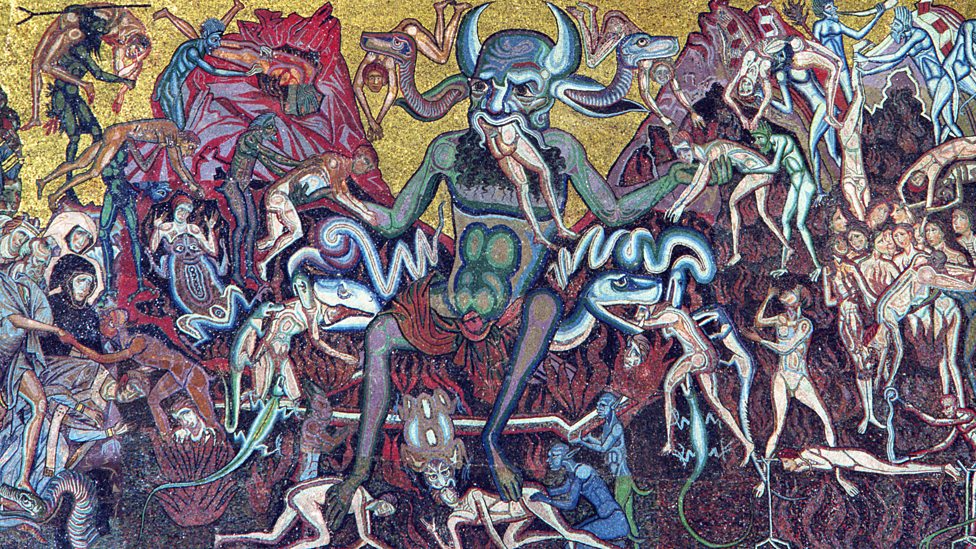
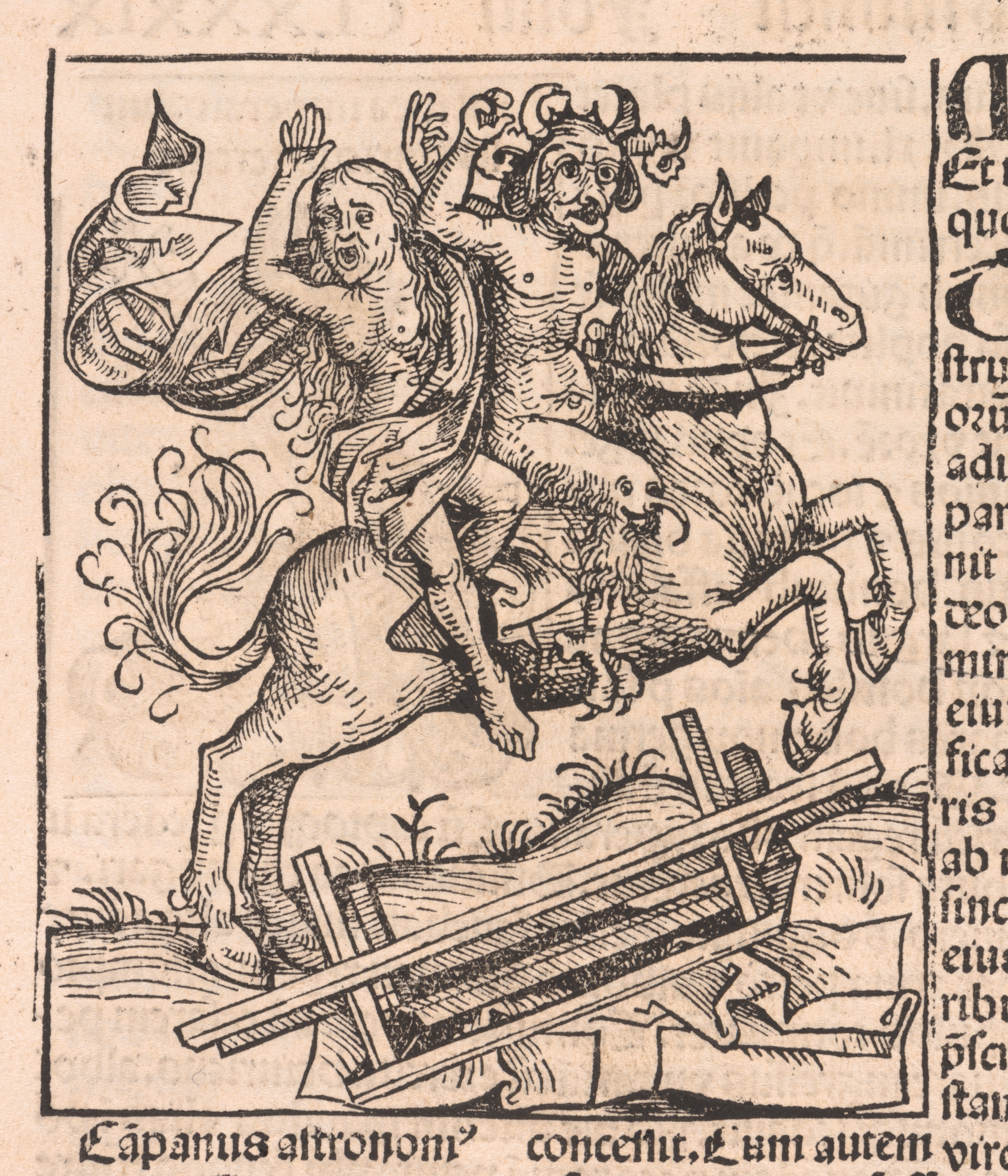
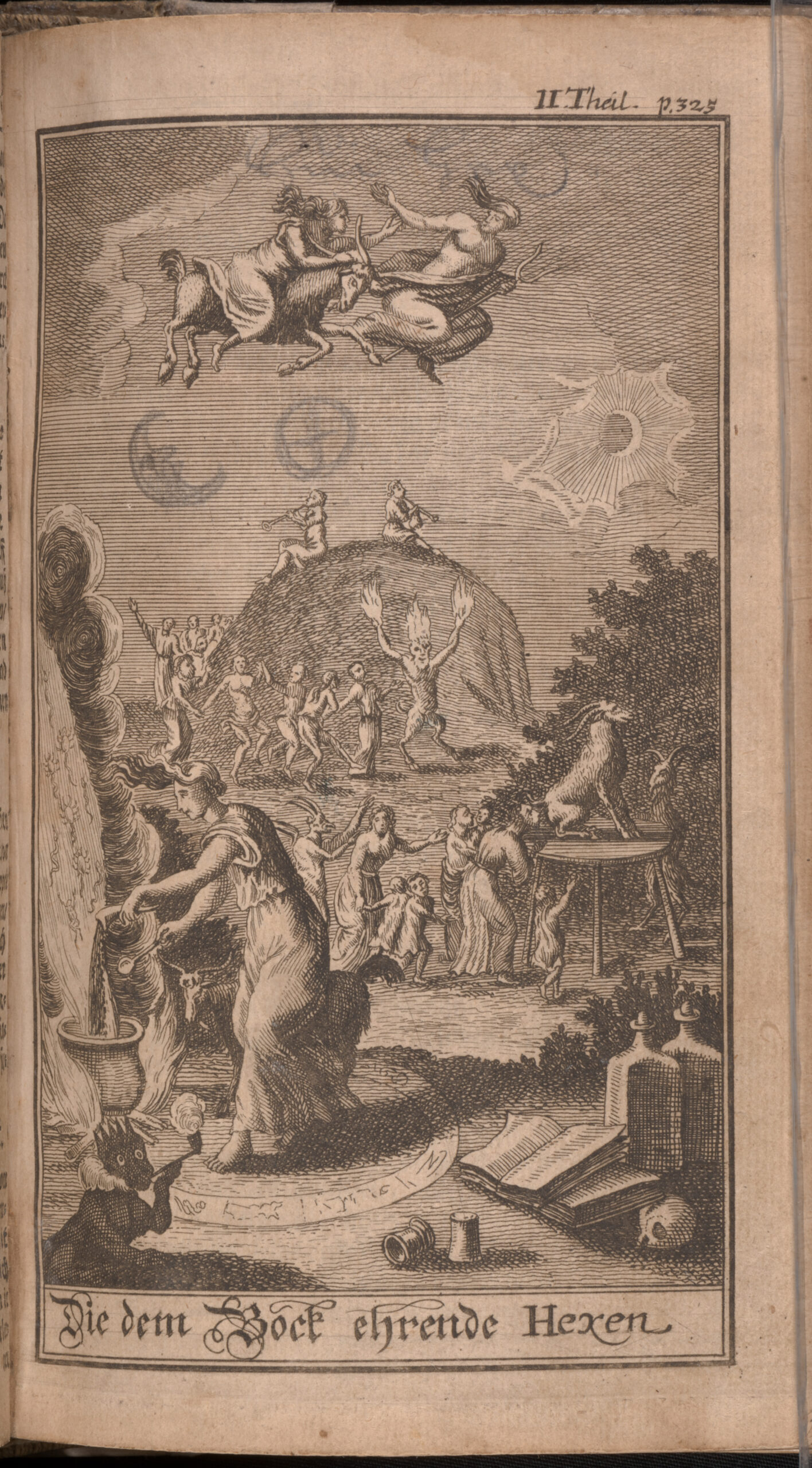
Goats are one of the most recognisable symbols in Satanic imagery — from medieval depictions of the Devil to the modern figure of Baphomet. But how did an ordinary farm animal become so closely associated with sin and the demonic?
The goat that appears in the Satan Sells logo isn’t entirely fictional…
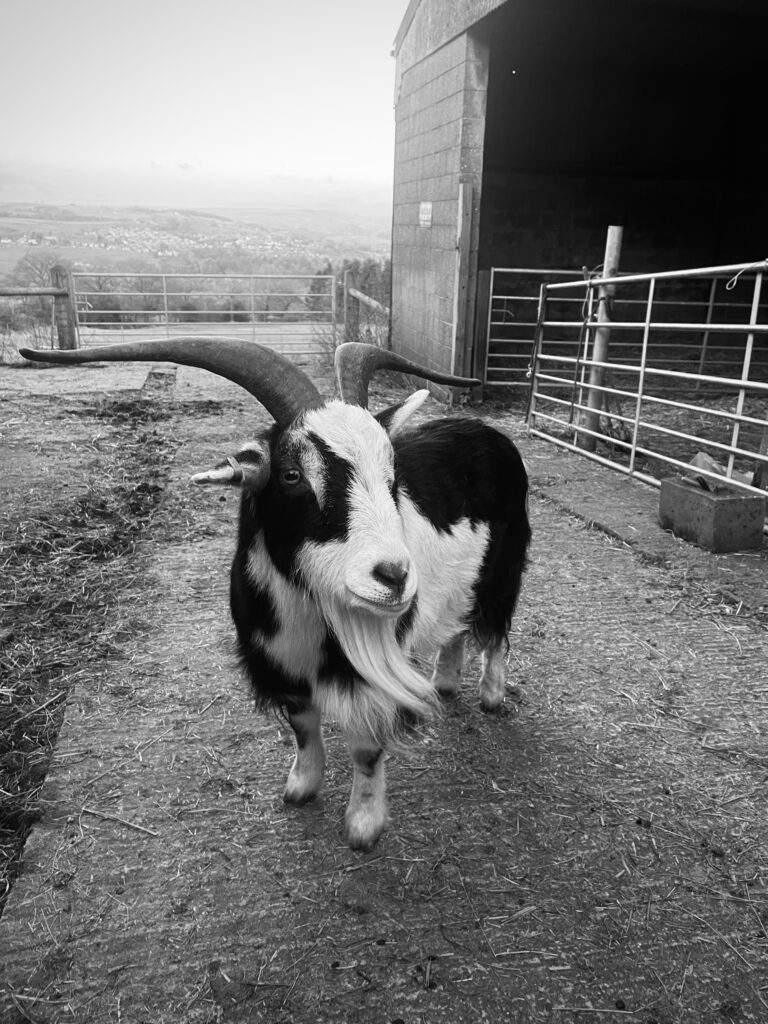
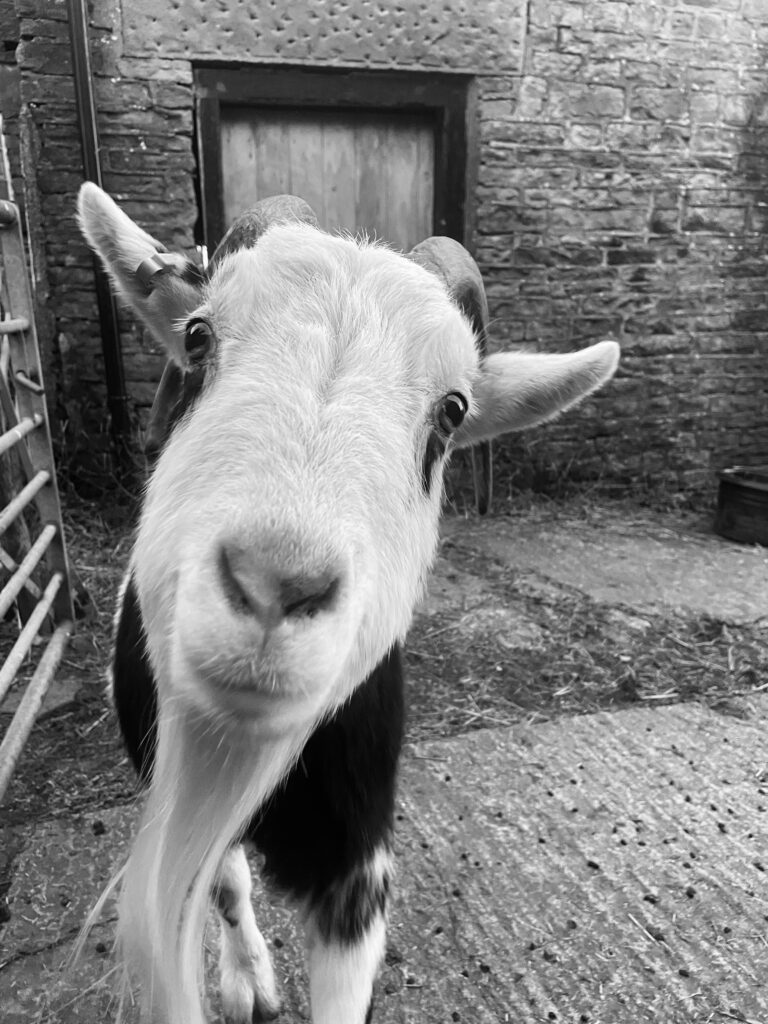
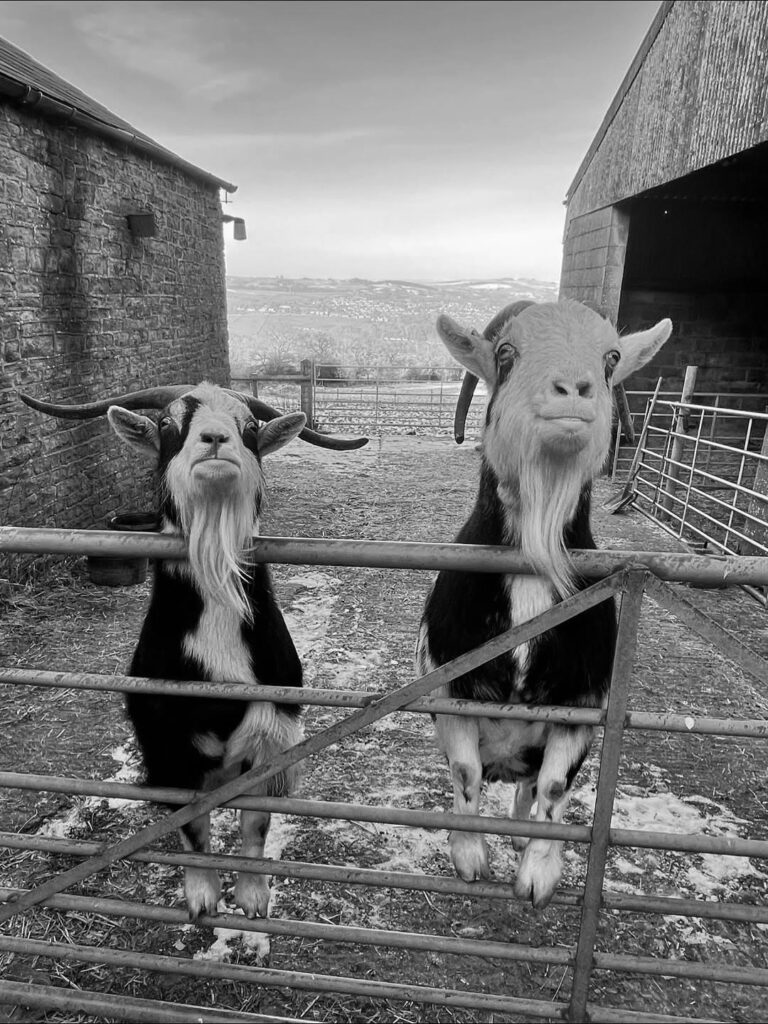
It’s actually inspired by one of my Dad’s goats, Gandalf, who lives alongside his (not so little) brother, Frodo. They spend their days doing what goats do best, which generally consists of:
- headbutting each other,
- eating food,
- headbutting whoever has the misfortune of bringing them said food,
- causing low level chaos.
Living the dream eh!? First impressions might suggest otherwise, but as goats go they’re very sweet boys. Not exactly at the top of my list of demonic things, but I’ve also got bruises to prove why they’re not at the bottom either…
Kidding (goat joke… get it) aside, it does pose a pretty interesting question:
Why do goats have such a strong association with Satan in the first place?
Because while Gandalf and Frodo are mostly interested in snacks and mischief, goats have spent centuries being used as one of the most recognisable symbols of the Devil.
A Biblically Bad Reputation
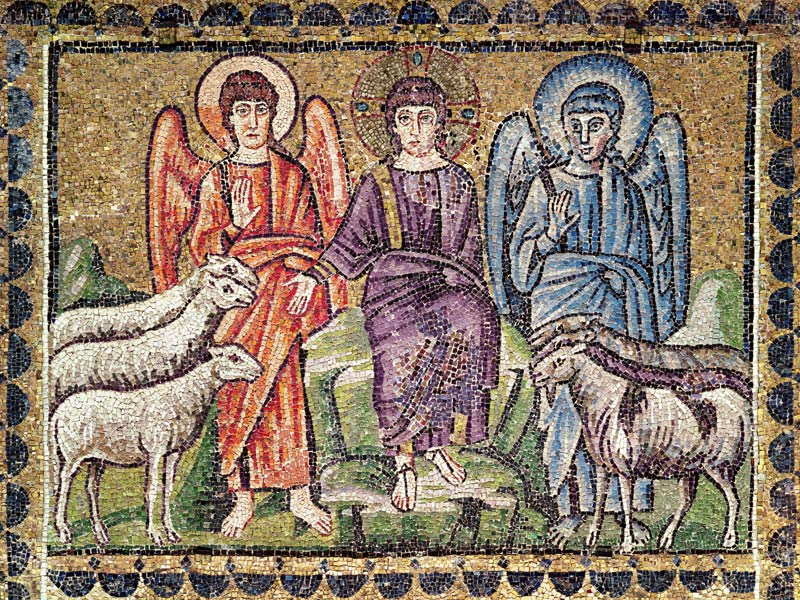
A huge part of the goat’s sinister reputation can be easily traced back to biblical symbolism. In Christian scripture, goats are not only used as standalone emblems (Leviticus 17:7), but in contrast with sheep too (Ezekiel 34:17, John 10:4). Throughout the bible, sheep are typically portrayed as obedient followers – a fitting metaphor for the faithful. Goats, by contrast, are used to represent those who stray from the flock.
This distinction is made explicit in the Parable of the Sheep and the Goats in the Gospel of Matthew (25:31-46). In the passage, humanity is divided at the final judgement in the same way a shepherd separates animals:
[31]“When the Son of Man comes in his glory, and all the angels with him, he will sit on his glorious throne. [32] All the nations will be gathered before him, and he will separate the people one from another as a shepherd separates the sheep from the goats. [33] He will put the sheep on his right and the goats on his left…
[41] “Then he will say to those on his left, ‘Depart from me, you who are cursed, into the eternal fire prepared for the devil and his angels…
[46] “Then they will go away to eternal punishment, but the righteous to eternal life.”
The message is fairly simple; goats become a stand-in for those who have failed to live according to Christian teachings. Even if the animal itself is neutral, the symbolic weight attached to it is not.
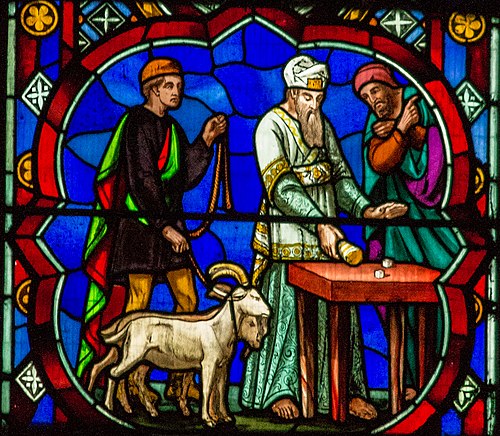
Goats also play a central role in one of the most striking ritual practices in the Hebrew Bible: the scapegoat ritual described in Leviticus 16. During the Day of Atonement, two goats would be selected. One would be sacrificed, while the other was symbolically burdened with the sins of the community and driven out into the wilderness. The text describes how Aaron is to:
“[21].. lay both hands on the head of the live goat and confess over it all the wickedness and rebellion of the Israelites—all their sins—and put them on the goat’s head. He shall send the goat away into the wilderness in the care of someone appointed for the task. [22] The goat will carry on itself all their sins to a remote place; and the man shall release it in the wilderness.”
In this moment, the goat quite literally becomes a vessel for collective wrongdoing, carrying sin away from society and into isolation. The idea that an animal could absorb and remove moral impurity gave the goat a powerful symbolic role… one that perhaps blurred the line between representing sin and being associated with it.
Some interpretations also connect this ritual to the figure of Azazel, a mysterious entity associated with the wilderness, further reinforcing the idea of the goat as something tied to spaces outside of social and moral order. In Leviticus 16, the chapter opens:
“[5] The community of Israel shall give Aaron two male goats for a sin offering and a ram for a burnt offering. [6] He shall offer a bull as a sacrifice to take away his own sins and those of his family. [7] Then he shall take the two goats to the entrance of the Tent of the Lord’s presence. [8] There he shall draw lots, using two stones, one marked “for the Lord” and the other “for Azazel”. [9] Aaron shall sacrifice the goat chosen by lot for the Lord and offer it as a sin offering. [ 10] The goat chosen for Azazel shall be presented alive to the Lord and sent off into the desert to Azazel, in order to take away the sins of the people.
In some readings, Azazel is understood as a place, a remote and desolate region beyond the boundaries of society. In others, it is interpreted as a supernatural being, sometimes even a fallen angel or demonic figure inhabiting the wilderness. Later traditions, particularly in apocryphal texts like the Book of Enoch, develop Azazel into a far more explicitly sinister character – being associated with warfare, deception witchcraft, and exile.
What remains consistent across these interpretations is the importance of location. The scapegoat is not just removed from the community; it is sent outward, into a space that exists beyond order, and the reach of the sacred. The wilderness, in biblical thought, is often a place of danger, uncertainty, and spiritual testing. Within this context, the goat becomes more than just a passive participant in ritual. It takes on the sins of the community and transports them across a boundary – from the ordered, social space of human life into the chaotic, untamed space beyond it.
Whether Azazel is understood literally as a being or symbolically as a concept, the effect is much the same. The goat is positioned at the threshold between purity and impurity, belonging and exclusion, civilisation and wilderness. It is not simply a symbol of sin, but a vehicle through which sin is displaced, contained, and ultimately expelled.
The Medieval Imagination
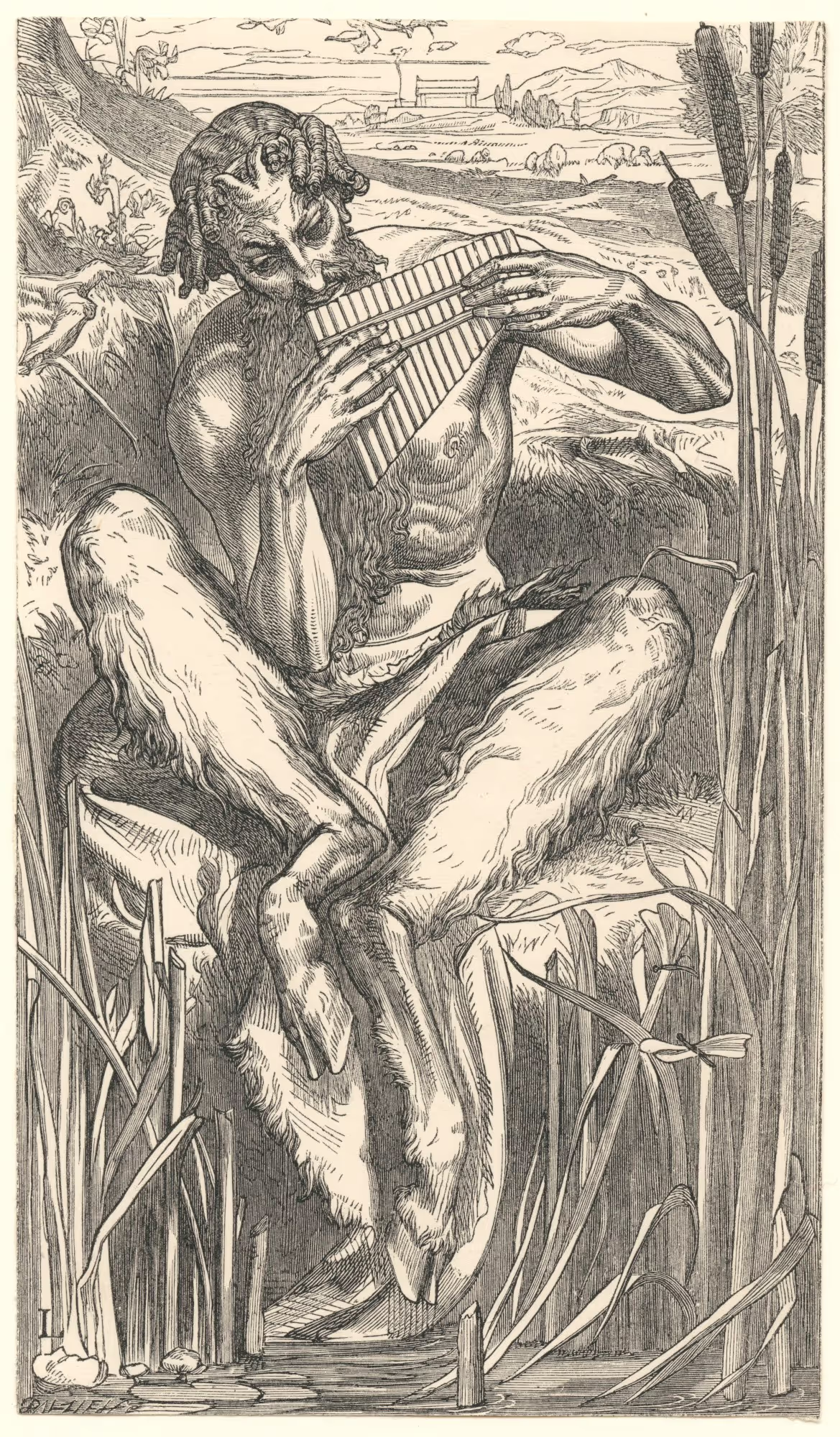
By the time the medieval period came around, goats had become a one-size-fits-all symbol for anything the Church associated with sin. Part of this was practical; goats were already associated with sexuality, stubbornness, and unruly behaviour in many parts of Europe. Many pre-Christian deities (particularly those associated with nature, fertility, and the wilderness) were depicted with horns or animal features. The Greek god Pan is perhaps the most well-known example, with his goat legs, horns, and connection to untamed landscapes.
Rather than disappearing entirely, these images were often reinterpreted through a Christian lens. Horned and animalistic figures, once linked to fertility or nature, were gradually reframed as something threatening or demonic. Over time, elements of these older visual traditions were absorbed into depictions of the Devil.
This is where the goat begins to take on a more recognisably “satanic” form.
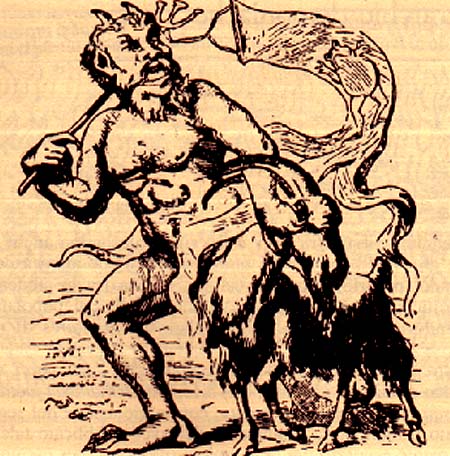
Medieval and early modern representations of Satan increasingly included goat-like features: horns, cloven hooves, fur, and hybrid human-animal bodies. These characteristics visually communicated ideas about instinct, excess, and a lack of control, reinforcing the moral associations already attached to goats in biblical thought.
Accounts from witch trials and folklore further cemented this imagery. In some testimonies, the Devil was described as appearing in the form of a black goat, while in others he took on a more humanoid figure with goat-like traits. These descriptions blurred the line between symbol and belief, embedding the goat more firmly within the cultural imagination of evil.
Enter Baphomet
By the nineteenth century, the image of the goat-headed figure had become firmly embedded in Western culture… but it was also about to be reinterpreted.
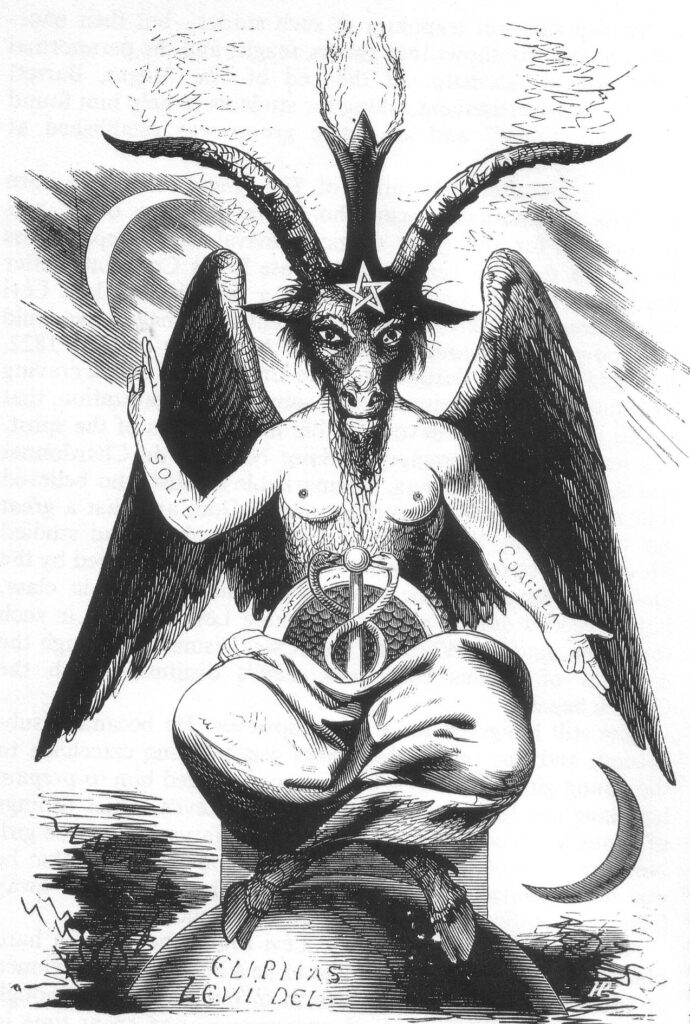
The French occultist Éliphas Lévi introduced one of the most famous images associated with the goat in his work Dogme et Rituel de la Haute Magie: the figure now commonly known as Baphomet. Lévi’s illustration depicts a winged, goat-headed figure with both male and female characteristics, seated between symbols of opposing forces.
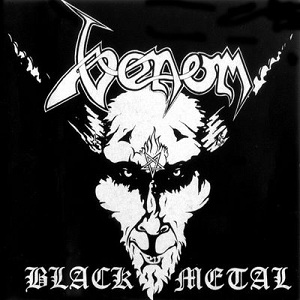
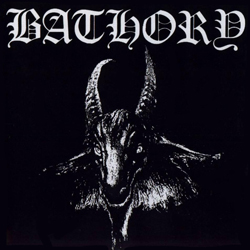
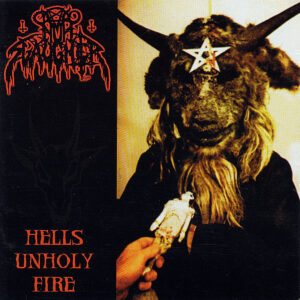
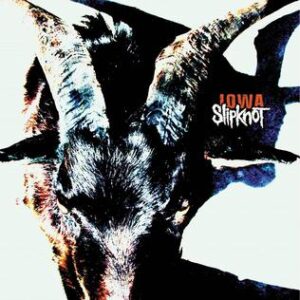
Importantly, Lévi did not intend Baphomet to represent a literal Devil. Instead, the image was designed to symbolise duality, balance, and the reconciliation of opposites; light and dark, male and female, human and animal, spiritual and material. However, as the image circulated, it became increasingly associated with Satanism in popular culture. Stripped of its original philosophical context, Baphomet became a powerful and provocative symbol, particularly within alternative and countercultural movements. Today, the goat-headed figure remains one of the most recognisable forms of Satanic iconography, appearing in everything from occult literature to heavy metal imagery.
Symbolism That Stuck
Across centuries, the meaning of the goat has shifted and evolved – from biblical metaphor, to medieval demon, to occult symbol, to modern cultural icon. Each stage adds another layer, but the core associations remain surprisingly consistent: rebellion, transgression, and the crossing of boundaries. In modern contexts, especially within alternative subcultures, these meanings are often reclaimed or reinterpreted. Rather than representing evil in a literal sense, the goat can symbolise individuality, resistance to authority, or a challenge to dominant moral frameworks.
In this sense, the “satanic goat” says far more about human attempts to define good and evil than it does about goats themselves.
Back On The Farm…
For all the symbolism layered onto them, goats themselves remain completely indifferent to it. Gandalf and Frodo certainly have no awareness of the roles animals like them have played in theology, folklore, or moral storytelling. They don’t represent sin, rebellion, or the breakdown of social order… They simply exist, navigating their environment in the same curious, slightly boisterous way goats always have.
What’s interesting here isn’t actually the goats, but rather what gets projected onto them.
Across centuries, the goat has been used as a way of thinking through ideas about boundaries – between good and evil, control and instinct, order and disorder. They become a convenient symbol for whatever sits just outside what a society is comfortable with. Something to define, distance, and, at times, fear.
And yet, stripped of all that meaning, you’re left with something much simpler.
An animal that climbs where it can, eats what it probably shouldn’t, and occasionally causes problems just because they feel like it. Not evil. Not symbolic. Just a goat.
Which, if anything, makes the journey from farm animal to one of the most recognisable symbols of Satanic imagery all the more telling- not necessarily about goats, but about the way people construct the idea of evil in the first place.