An 80-year retrospective on the Church of Satan, tracing how Anton LaVey’s original philosophy evolved into a fragmented cultural force shaped by the Satanic Panic, subculture, and the rise of the Temple of Satan

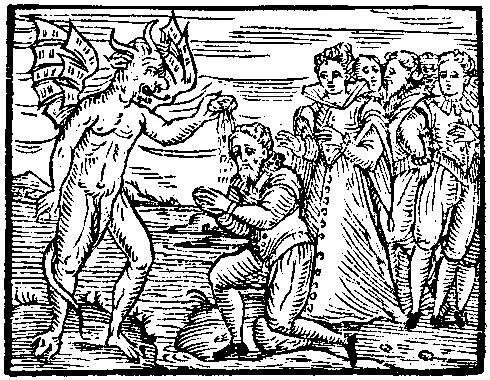
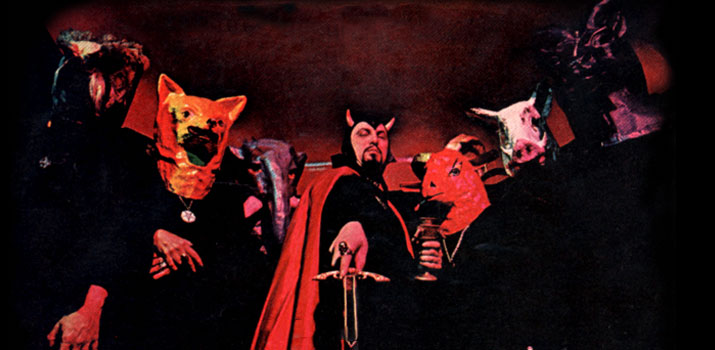
Happy Birthday Satan! Well… Sort of. As I explored in a recent post, images of the Devil have been around for quite some time – basically throughout the entire history of humanity to cut to the chase – but in religious terms, the appearance of an openly Satanic movement is actually fairly recent. In fact, modern Satanism as we recognise it today, formalised in 1966 with the founding of the Church of Satan, is younger than both The Church of Jesus Christ of Latter-day Saints (1830) and Jehovah’s Witnesses (1870s). Somewhat underwhelmingly, it’s not the grand, ancient lineage people tend to imagine.
That gap between perception and reality is where things really start to get interesting; while Satanism is often framed as something timeless, lurking just beneath the surface of human history, the version that enters public consciousness is anything but. It’s modern, it’s constructed, and perhaps most importantly, very carefully presented not only by its admiration, but members, critics and academics alike. This isn’t just a tale about belief, or even religion in the traditional sense. Instead it’s about how something positions itself, how it’s seen, and how easily that image can take on a life of its own over the course of 80, very eventful, years.
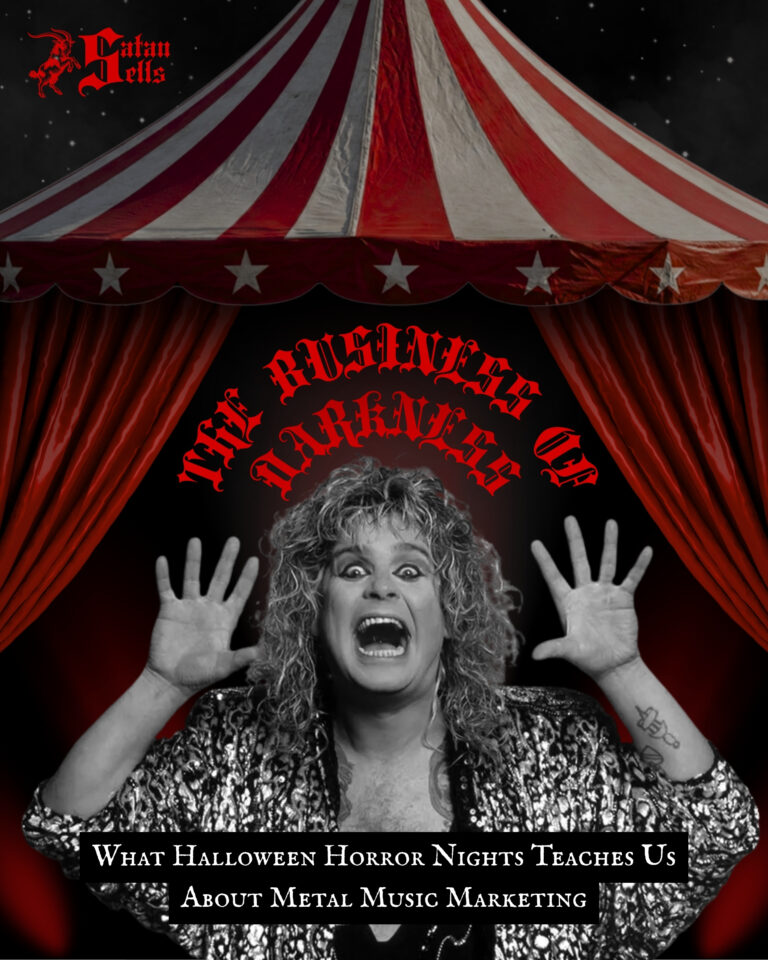
Roll Up Roll Up! LaVey The Showman
Religions are rarely born quietly, and the Church of Satan is certainly no exception. Satanism, put simply, likes to make sure you can see it before you can figure anything out about it. That instinct sits squarely with Anton LaVey, and more importantly, with the version of himself he chose to present. Before 1966, LaVey’s background was a performative one. He claimed to have run away to join the circus as a carnival musician, honing his skills on the pipe organ and calliope, where he also happened to be a lion tamer?! (Although there’s much less substantial evidence of the latter.) Later becoming a crime scene photographer for the San Francisco Police Department, before apparent promotion to psychic investigator, looking into “800 calls” referred to him by SFPD… These details are all incredibly difficult to verify in full, but they nevertheless fed directly into the persona he cultivated. Whether entirely factual or carefully embellished, these tales arguably point in the same direction: a fascination with spectacle, the mechanics of attention, and with the thin line between illusion and belief. By the time he founded the Church of Satan LaVey wasn’t stepping into entirely unfamiliar territory, he was refining something he already understood.
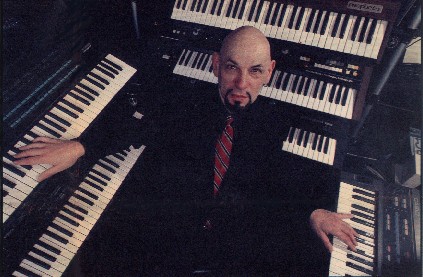
And what he actually built was… not what people expect. Despite everything about the imagery suggesting the opposite, LaVeyan Satanism is explicitly atheistic. There is no Satan being worshipped. Satan functions as a symbol, one of opposition, individualism, and rejection of imposed moral systems. That alone is enough to throw most first-time readers, because it cuts directly against the dominant cultural narrative of what “Satanism” is supposed to mean.
Instead, the belief system centres on a few core ideas:
The Eleven Satanic Rules of the Earth
by Anton Szandor LaVey © 1967
- Do not give opinions or advice unless you are asked.
- Do not tell your troubles to others unless you are sure they want to hear them.
- When in another’s lair, show him respect or else do not go there.
- If a guest in your lair annoys you, treat him cruelly and without mercy.
- Do not make sexual advances unless you are given the mating signal.
- Do not take that which does not belong to you unless it is a burden to the other person and he cries out to be relieved.
- Acknowledge the power of magic if you have employed it successfully to obtain your desires. If you deny the power of magic after having called upon it with success, you will lose all you have obtained.
- Do not complain about anything to which you need not subject yourself.
- Do not harm little children.
- Do not kill non-human animals unless you are attacked or for your food.
- When walking in open territory, bother no one. If someone bothers you, ask him to stop. If he does not stop, destroy him.
It’s not trying to save you, and it’s certainly not trying to fix the world. If anything, it assumes the world is fundamentally indifferent and asks what you’re going to do about it.
Which is where the rituals come in… And where the theatricality starts to make at least a bit of sense. Because if there’s no god, no external force to direct that energy toward, then ritual becomes internal. LaVey frames it as psychodrama: a controlled environment where emotion, desire, anger, ego can be expressed and processed. The robes, the candles, the symbols – they’re not about summoning anything, they’re about staging something… Creating a moment where the individual can fully inhabit whatever it is they’re trying to feel or release; that is the “magic” Satanism so often discusses.
Crucially, all of this was happening in public view almost immediately. The Church was only founded in 1966, but by 1967, LaVey was already performing a Satanic wedding and baptising his daughter in ceremonies designed as much for cameras as participants. The Black House (LaVey’s home) became a kind of set, with journalists invited in to document something that was equal parts “ritual” and performance art. By 1969, with the publication of The Satanic Bible, the philosophy was formalised, but by that point, most people already recognised the image.
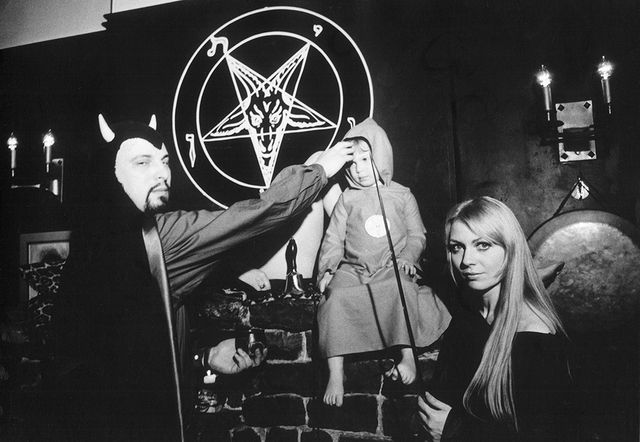
And that’s the thing that really stuck. Not the atheism. Not the nuance. The image.
What those early years ultimately demonstrate is how deliberately the ‘branding’ behind the Church was constructed, and how quickly it took hold. By the early 1970s, the figure of the Satanist – robed, ritualistic, and possibly child-sacrificing- was already fixed in the cultural imagination. Once something reaches that level of recognisability, it becomes difficult to contain (just think of Labubus…), because at that point, it stops belonging entirely to the people who created it and more so to the wonders of the public imagination.
The Satanic Bible (1969)
By the time The Satanic Bible was published, the Church of Satan already had a look, a presence, something people could point to and shout about. What the book did was spell out, in fairly blunt terms, what any of it was actually supposed to mean.
And the first thing it did, repeatedly, was remove the one assumption people kept making. There was no literal Satan. No deity, no supernatural force, nothing being worshipped in the traditional sense. Satan was positioned as a symbol: one of opposition and refusal. That alone cut against the grain of how “Satanism” had been constructed in the public imagination, which is partly why it kept getting ignored.
“Most Satanists do not accept Satan as an anthropomorphic being with cloven hooves, a barbed tail, and horns. He merely represents a force in nature – the powers of darkness which have been named just that because no religion has taken these forces out of the darkness. Nor has science been able to apply technical terminology to this force. It is an untapped reservoir that few can make use of because they lack the ability use a tool without having to first break down and label all the parts which make it run. It is this incessant need to analyze which prohibits most people from taking advantage of this many faceted key to the unknown – which the Satanist chooses to call “Satan”.” (p. 47)
What replaced it wasn’t especially mystical. If anything, it was deliberately grounded, and at times, deliberately harsh. LaVey framed humans as animals rather than spiritual beings, rejected the idea of universal morality, and dismissed the expectation of self-sacrifice as both unrealistic and, in his view, dishonest. The emphasis fell on the self – with a particular focus in autonomy and the idea that meaning wasn’t given from above but constructed, or taken, depending on how you want to read it.
“The Satanist realizes that man, and the action and reaction of the universe, is responsible for everything, and doesn’t mislead himself into thinking that someone cares. No longer will we sit back and accept “fate” without doing anything about it, just because it says so in Chapter such and such, Psalm so and so – and that’s that! The Satanist knows that praying does absolutely no good – in fact, it actually lessens the chance of success, for the devoutly religious too often sit back complacently and pray for a situation which, if they were to do something about it on their own, could be accomplished much quicker!” (p. 35)
That’s where some of the more uncomfortable elements sat. Compassion wasn’t treated as a given. LaVey argued instead for what he called “responsibility to the responsible,” a selective approach that placed value on reciprocity rather than obligation. People weren’t equal in this framework, not in ability, not in worth, and certainly not in what they were owed. It’s one of the points that tends to get smoothed over in casual summaries, but it runs through the text consistently.
“Satanism advocates practicing a modified form of the Golden Rule. Our interpretation of this rule is: “Do unto others as they do unto you”; because if you “Do unto others as you would have them do unto you,” and they, in turn, treat you badly, it goes against human nature to continue to treat them with consideration. You should do unto others as you would have them do unto you, but if your courtesy is not returned, they should be treated with the wrath they deserve.” (pp. 39-40)
The same applies to indulgence. Where Christianity emphasised restraint, LaVey pushed in the opposite direction, advocating indulgence over abstinence – but with a caveat. It wasn’t about excess for its own sake, or loss of control, but about rejecting guilt as a moral baseline. Enjoyment wasn’t something to apologise for, and denial wasn’t inherently virtuous.
“He who upholds his responsibilities should be most entitled to the pleasures of his choice, without censure from the society he serves.
Finally a religion (Satanism) has been formed which commends and rewards those who
support the society in which they live, instead of denouncing them for their human needs.” (p. 57)
Ritual sat alongside all of this in a way that only really makes sense once the atheism is taken seriously. There was no claim that anything supernatural was happening. Instead, ritual was framed as a kind of structured psychodrama, a way of focusing emotion and giving it form. LaVey outlined different types – lust, compassion, destruction – each tied to a specific intent. The setting mattered, but not because it was sacred. It mattered because it worked.
“Satanism, realizing the current needs of man, fills the large grey void between religion and psychiatry. The Satanic philosophy combines the fundamentals of psychology and good, honest emotionalizing, or dogma. It provides man with his much needed fantasy. There is nothing wrong with dogma, providing it is not based on ideas and actions which go completely against human nature.” (p. 42)
Taken together, what The Satanic Bible did was fix a set of positions that had already been hinted at through the Church’s early public image. It wasn’t especially complex, but it was specific: Atheistic, individualistic, and often deliberately abrasive in its rejection of conventional morality. Once it was written down like that, it became much harder to control how it was used. Not because it was vague, but because it was clear enough to be lifted, repeated, and reinterpreted without needing any connection to the organisation that produced it.
Symbolism, Recognition, and Detachment

If the ideas had been laid out clearly by the end of the 1960s, the image had already done most of the work. Long before people were reading The Satanic Bible, they had already seen what Satanism was supposed to look like, and that image stuck. When the Church of Satan opened itself up to journalists in the late 1960s – inviting photographers into the Black House, staging rituals, publicising ceremonies like the 1967 Satanic wedding and baptism – it created something immediately recognisable. That visibility mattered more than the text that followed.
The visual language itself wasn’t new; the inverted pentagram and Baphomet had already circulated through earlier occult traditions, but LaVey’s movement stripped them down and standardised them. By the early 1970s, there was a fixed set of cues: black robes, candles, ritual settings, a small group of repeated symbols. These appeared in newspaper features, television segments, and magazine spreads across the US and UK. You didn’t need to understand the philosophy to recognise what you were looking at.
That separation showed up quickly. While LaVeyan Satanism, as set out in The Satanic Bible, was explicitly atheistic and fairly rigid in its emphasis on individualism and self-interest, the imagery moved without those constraints. By the mid-1970s, Satanic symbols were already appearing in exploitation cinema and horror films, often used as shorthand for threat or moral corruption rather than anything connected to the Church’s actual beliefs. By the late 1970s and early 1980s, the same imagery had moved into album art and stage design in rock and metal scenes, again with little reference to LaVey’s framework.
This wasn’t reinterpretation so much as detachment. The symbols were being reused because they were recognisable, not because they were understood. A pentagram no longer pointed back to a specific set of ideas; it signalled atmosphere. Ritual imagery no longer implied LaVeyan psychodrama; it implied something darker, more ambiguous, and often deliberately misrepresented.
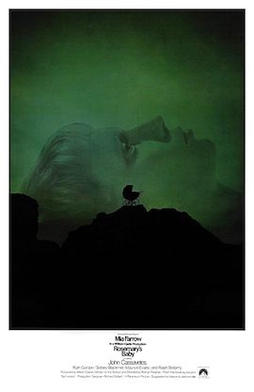

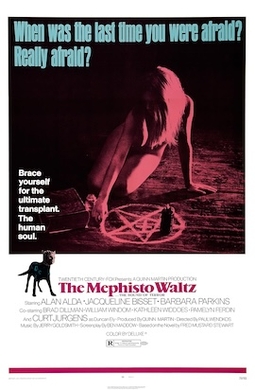

The Church never fully controlled that shift. Once those images had circulated through press coverage, film, and music, they no longer depended on accuracy. They could be reproduced without context, and they often were. By the time the Satanic Panic took hold, that gap between image and belief had already been established, which is partly why the symbols could be so easily repurposed as “evidence” of something far more extreme than anything the Church actually promoted.
By the late twentieth century, the situation was fixed. The symbols stayed consistent, but their meanings didn’t. In some cases, they still connected back to the ideas laid out by the Church of Satan. In others, they had become entirely aesthetic, used in music, fashion, and media with no reference to their original context.
That’s the shift that actually mattered. Not that the imagery spread, but that it spread independently of the system it came from. Once that happened, Satanism stopped being something that could be defined purely by the organisation that introduced it.
The Panic Economy
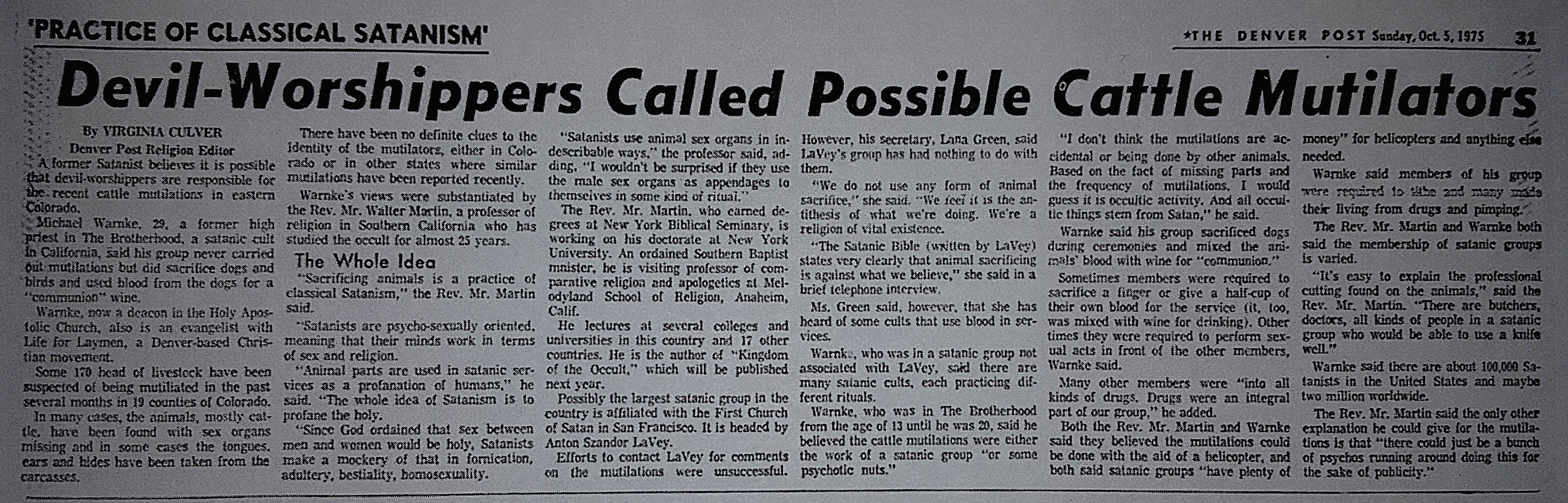
By the time the 1980s began, the gap between what Satanism was and what people thought it was had already opened up. The Satanic Panic didn’t create that gap… it filled it. From the early 1980s through the early 1990s, allegations of organised Satanic ritual abuse spread across the United States and, to a lesser extent, the UK. These weren’t isolated rumours – they were taken seriously by police, social workers, therapists, and courts. The most widely known case, the McMartin preschool trial (1983-1990), centred on claims that children had been abused in elaborate underground rituals involving secret tunnels, animal sacrifice, and coordinated cult activity. Similar accusations appeared elsewhere: the Kern County cases in California, the Orkney child abuse scandal in Scotland in 1991, and a string of smaller investigations that followed the same pattern. None of these cases produced credible evidence of organised Satanic networks. Many relied on coerced or leading interview techniques, particularly with children, where repeated questioning produced increasingly elaborate and contradictory accounts. By the early 1990s, most convictions had been overturned or collapsed under scrutiny, but by that point the narrative had already embedded itself.
What’s striking is how little any of this had to do with the actual beliefs of the Church of Satan. LaVeyan Satanism had explicitly rejected the supernatural from the beginning. There was no belief in a literal Satan, no doctrine supporting ritual abuse, and no organisational structure that resembled the secret networks being described. But the imagery matched just enough to make the accusations feel plausible. The robes, the symbols, the idea of ritual – once those were already familiar, it became easier to attach new meanings to them.
Academic work on the period has been fairly consistent about this. Sociologist Jeffrey Victor argued that the panic functioned as a form of contemporary legend, reflecting social anxieties rather than organised reality, while legal scholars like James T. Richardson pointed out that claims gained legitimacy through repetition in media and courtrooms rather than through evidence. In other words, the more the story was told, the more credible it appeared. Media played a central role in that process. Daytime talk shows, tabloid reporting, and sensationalist documentaries amplified the same set of claims, often presenting them as investigative breakthroughs rather than unverified allegations.

Books like Michelle Remembers (1980) helped popularise the idea of recovered memories of ritual abuse, further embedding the narrative in public consciousness. Once these stories entered mainstream circulation, they didn’t need proof to sustain themselves—they just needed to be repeated. The result was a feedback loop. Public fear drove investigation, investigation generated more stories, and those stories reinforced the original fear. Satanism became a catch-all explanation for a range of social anxieties—child abuse, the breakdown of traditional family structures, distrust of institutions—despite having no structural connection to most of the cases it was being used to explain.

By the time the panic began to collapse in the early 1990s, the damage had already been done. Legally, many cases were discredited. Culturally, the association stuck. The idea of Satanism as something inherently dangerous, hidden, and conspiratorial didn’t disappear with the evidence… it lingered, because it had never really depended on evidence in the first place.
And that’s the part that matters for what comes next. Because once a symbol has been tied that tightly to fear, it doesn’t easily return to neutrality.
Metal, Subculture, and What Happened After
By the time the Satanic Panic began to collapse in the early 1990s, the imagery hadn’t disappeared – it had already been picked up elsewhere and put to different use. What had been framed for a decade as evidence of hidden crime was reabsorbed into subculture, particularly within extreme music scenes, where it lost most of that moral framing and became something closer to identity. This shift had already started before the panic fully died out. By the early 1980s, bands like Venom were using explicitly Satanic imagery in album titles and artwork, not as a reflection of LaVeyan philosophy but as a way of pushing against mainstream expectations of what music should look and sound like. The point wasn’t theological accuracy, it was impact. That approach carried through into later scenes, particularly in black metal, where bands such as Mayhem and Darkthrone used similar imagery in a more extreme and often deliberately confrontational way.
In some cases, this stayed at the level of aesthetics – album art, stage design, lyrics that leaned into Satanic or anti-Christian themes without any consistent philosophical framework. In others, it crossed into something more literal. The early 1990s Norwegian black metal scene, for example, became associated with a series of church burnings and violent incidents, most notably involving Varg Vikernes. These events were widely reported and, once again, reinforced the idea of Satanism as something dangerous and oppositional, even though the motivations behind them were often more tied to anti-Christian sentiment, nationalism, or individual extremism than to anything resembling LaVeyan Satanism.
What’s consistent across all of this is that the imagery continued to circulate without the original framework attached to it. The ideas set out by Anton LaVey – atheism, individualism, ritual as psychodrama – were rarely the focus. Instead, Satanic symbolism functioned as a way of signalling distance from mainstream culture, particularly from organised religion. It didn’t need to be precise to be effective.
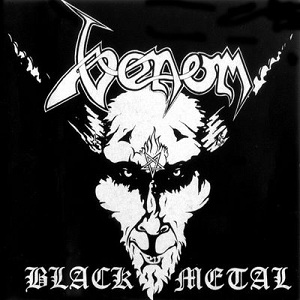
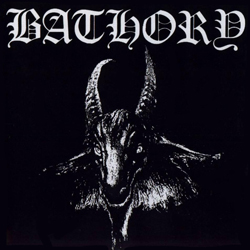
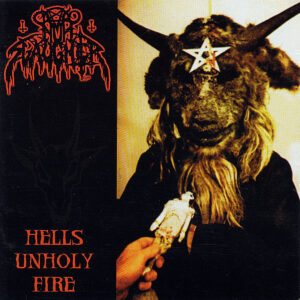

At the same time, this subcultural use helped stabilise the imagery in a different way. After the panic years, where symbols had been tied to fear and suspicion, they were recontextualised as part of a recognisable aesthetic within specific scenes. That didn’t remove their associations entirely, but it shifted how they were used. Rather than being imposed from outside as accusation, they were adopted from within as expression. By the mid to late 1990s, that pattern was well established. Satanic imagery existed comfortably in music, fashion, and visual culture, often detached from any formal belief system. For some, it still connected back to the Church of Satan or to LaVeyan ideas more broadly. For many others, it didn’t. It functioned independently, carrying tone and recognition without requiring explanation.
And that’s where the trajectory shifts again. Because once something becomes that embedded in subculture, it stops needing its origin at all.
Splinters and Schisms
Long before the Satanic Panic distorted things from the outside, Satanism had already started to fracture from within. The idea that the Church of Satan represented a single, unified movement doesn’t really hold up once you get into the 1970s, because disagreements over what Satanism was started producing breakaways fairly early on.

The most significant of these was the formation of the Temple of Set in 1975 by Michael Aquino (look at those brows!!), a former high-ranking member of the Church. This wasn’t a minor disagreement or a personality clash – it was a fundamental break over belief. LaVeyan Satanism had been explicitly atheistic, framing Satan as a symbol rather than a literal being. Aquino rejected that entirely, arguing instead for a metaphysical framework in which Set, drawn from Egyptian mythology, was treated as a real, external force. That shift matters because it cuts directly against the central claim LaVey had built the Church on: that there was nothing supernatural at all.
Alongside that, smaller and less stable groups began appearing earlier in the decade, including the Church of Satanic Brotherhood in 1973. These weren’t as influential or as clearly defined as the Temple of Set, but they point to the same problem: once the ideas were out in the world, they didn’t stay contained. People adapted them, misread them, or rebuilt them entirely depending on what they wanted out of them. By the late 1970s and into the 1980s, that pattern continued with more loosely defined organisations such as the World Church of Satanic Liberation. These groups often blended Satanic imagery with other occult, political, or countercultural ideas, sometimes keeping fragments of LaVey’s philosophy, sometimes discarding it altogether. What they shared wasn’t consistency, but a willingness to treat “Satanism” as something flexible rather than fixed.
What sits underneath all of these splits is the same issue: authority. Who gets to define what Satanism actually is? Under Anton LaVey, that authority was centralised, even if it was informal. Once people began to challenge that – whether by introducing spirituality, reworking the philosophy, or simply ignoring the structure altogether – the idea of a single definition started to break down.
By the time you reach the 1990s, Satanism is already functioning less like a unified movement and more like a set of competing interpretations. Some stay close to LaVey’s original framework. Others move in completely different directions. But none of them operate in isolation, because they’re all drawing, in one way or another, from the same starting point. Once that fragmentation sets in… it never really slows down.
Momento Mori
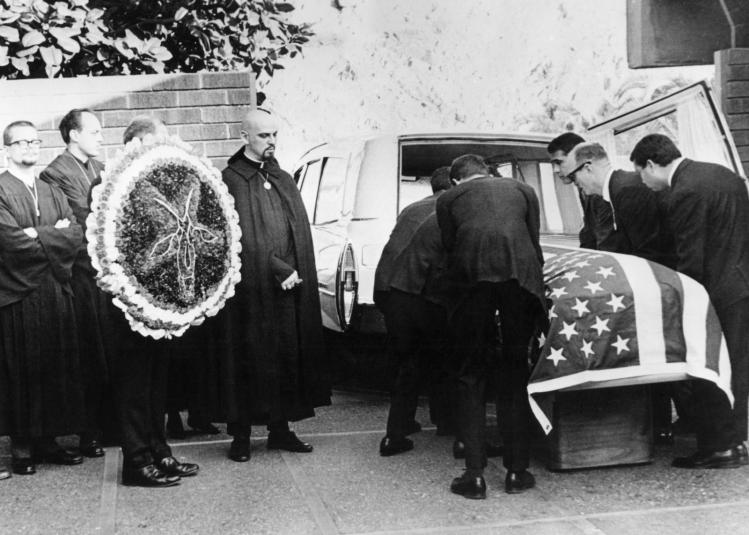

When Anton LaVey died in 1997, the problem wasn’t succession in the dramatic sense… it was definition. Up to that point, the Church of Satan had been anchored to one sinlgle person. However controlled or constructed that image was, it still gave the organisation an epicentre. Once the Patriarch had fallen, that centre had to be replaced with something less flexible. The immediate handover went to Blanche Barton, who had already been involved in the Church’s inner structure during LaVey’s later years. Her role wasn’t to reinvent anything, and she didn’t try to. The focus was continuity – holding onto the framework LaVey had established and preventing it from drifting at a point where, externally, “Satanism” was already being used to describe a dozen different, often contradictory things. That meant keeping the organisation stable rather than visible.

That approach becomes more formalised in 2001, when leadership passed to Peter H. Gilmore and Peggy Nadramia. From that point on, the Church’s public presence shifted noticeably. The early reliance on spectacle—media appearances, staged rituals, controlled shock value—was replaced by something quieter and more administrative. Statements became more precise, doctrine more clearly defined, and the line between “official” Satanism and
everything else was drawn much more sharply. A lot of that came down to necessity. By the late 1990s and early 2000s, Satanism already existed in multiple forms outside the Church’s control—subcultural, theistic, political, aesthetic—and if the organisation wanted to maintain any kind of coherence, it had to be explicit about what it was and wasn’t. That meant reinforcing the atheistic position, rejecting supernatural interpretations, and distancing itself from both the panic-era associations and the newer movements that were beginning to emerge.
In practical terms, the Church stopped trying to shape how Satanism looked and focused instead on how it was defined. It didn’t chase visibility in the same way it had under LaVey, and it didn’t attempt to absorb or respond to every reinterpretation happening around it. Instead, it narrowed its scope, maintaining a fixed philosophical position while everything else around it continued to shift. That’s the key change after 1997…. Not collapse, not reinvention, rather, consolidation. The Church of Satan moved from being something that actively constructed an image to something that maintained a definition, in a landscape where the word “Satanism” had already stopped meaning just one thing.
A New Direction
By the 2010s, Satanism didn’t just exist as something to define or defend – it was being actively repurposed. The emergence of the The Satanic Temple in 2013 marked a shift away from the inward, philosophy-first model of the Church of Satan and towards something far more public-facing. Like LaVeyan Satanism, the Temple rejected belief in a literal Satan. But beyond that, the overlap is pretty limited; I think I’ll probably do a post in the future exploring the differences between Satanic denominations up close. Where the Church had insisted on Satanism as a largely individual philosophy, the Temple treated it as something that could be organised, mobilised, and used in public. Its Seven Tenets – focused on bodily autonomy, compassion, and rationality – were written in deliberately accessible language, and more importantly, they were designed to be applied.
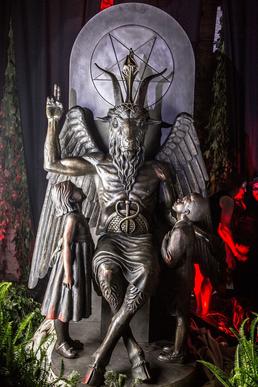
That application is what set it apart. Rather than staying within a defined internal framework, the Temple moved directly into legal and political spaces, particularly around issues of religious freedom and church-state separation. Campaigns involving public monuments, reproductive rights, and education policy placed Satanic symbolism in highly visible, deliberately contentious contexts, which I recently investigated in a bit more detail here. If one religious viewpoint was allowed space in law or public life, then, by the same logic, so was another.
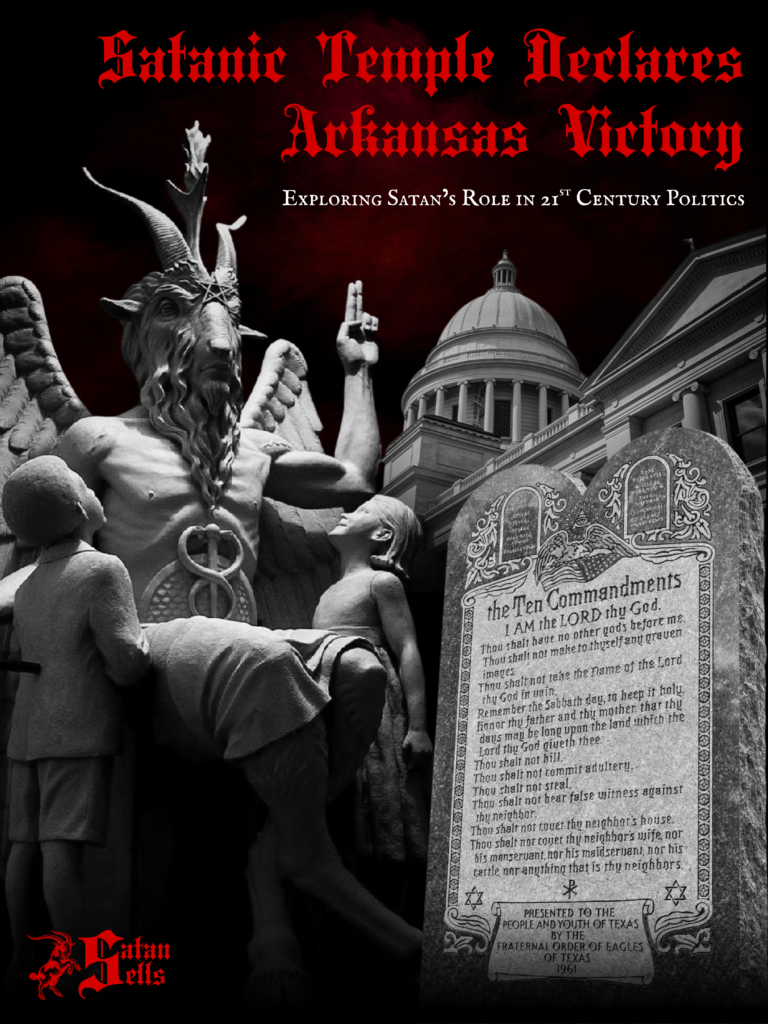
This is also where the tension with the Church of Satan becomes unavoidable. From the Church’s perspective, this kind of activism sits outside what Satanism is supposed to be. It introduces collective identity, political engagement, and a kind of moral positioning that LaVeyan philosophy had largely rejected. From the Temple’s perspective, disengagement is its own kind of position, and one that leaves existing power structures unchallenged. What matters here isn’t which side is “right,” but what the split represents. By this point, Satanism is no longer being argued over within a single framework. It’s being used for different purposes entirely. In one case, it remains a fixed, atheistic philosophy focused on the individual. In the other, it becomes a tool for public intervention, using the same symbols to expose legal and cultural inconsistencies.
And that’s a very different kind of development from the earlier splinters. Groups like the Temple of Set had broken away over belief. The Satanic Temple breaks away over function. It isn’t trying to redefine what Satanism is so much as what it can do.
By this point, the shift is complete. Satanism doesn’t operate as a single lineage anymore – it operates as a set of competing uses, all drawing from the same visual and historical starting point, but moving in entirely different directions.
What 80 Years Left Behind
Eighty years on, Satanism hasn’t settled into anything particularly stable, and it doesn’t really make sense to pretend that it has. What began in 1966 with the Church of Satan under Anton LaVey was specific enough at the time—atheistic, individualistic, deliberately opposed to Christian moral structure—but it didn’t stay contained for long.
The publication of The Satanic Bible fixed those ideas in place, but it also made them portable. The early media exposure—the rituals, the photographs, the Black House—made the imagery recognisable far beyond the people actually engaging with the philosophy. From there, the two drifted apart. The symbols circulated through film, music, and wider culture, while the ideas remained relatively fixed within the Church itself.
The Satanic Panic widened that gap to the point where the two were barely connected. Satanism became a label applied to things that had no real relationship to LaVeyan belief, but the association stuck because the imagery was already familiar. Even after the panic collapsed, that version of Satanism didn’t fully disappear—it just became one of several competing interpretations.
At the same time, internal splits had already made it clear that the Church wasn’t the only authority. The formation of the Temple of Set in 1975, along with smaller groups like the Church of Satanic Brotherhood and the World Church of Satanic Liberation, showed how quickly disagreement turned into fragmentation. After LaVey’s death in 1997, that fragmentation became harder to ignore, even as the Church itself stabilised under Blanche Barton and later Peter H. Gilmore.
By the 2010s, groups like The Satanic Temple were using the same symbols in entirely different ways, not to define a philosophy but to intervene in legal and political debates. At that point, the idea of a single Satanism had already broken down. What remained was a set of overlapping uses—philosophical, aesthetic, political—often sharing very little beyond a name and a set of recognisable symbols.
And so, that’s what eighty years actually leaves behind. Not a unified movement, but a layered history where image, belief, misinterpretation, and reuse all sit on top of each other. Some of it is tightly defined… Some of it isn’t; most of it just depends on where you’re looking from.
And honestly, that’s probably as close as it gets to a consistent definition.
Keep Reading...