An analysis of how heavy metal’s visual identity, mythology and symbolism create value across theme parks, merchandise and immersive experiences.
For the last five years I’ve worked in the immersive entertainment sector, watching thousands of guests move through carefully designed worlds built to provoke excitement, curiosity and even fear. Like most of my colleagues, I found it impossible to spend that long working in attractions without becoming interested in the mechanics behind them: how stories are told, how environments shape emotion and how merchandise can extend an experience long after guests leave. In truth, that background has also fundamentally shaped how I approach my own research into heavy metal marketing.
While my PhD explores the relationship between Satanic imagery, heavy metal and commercial culture, I’ve become increasingly interested in the ways metal exists beyond the stage. Festivals, fashion, exhibitions, merchandise and immersive experiences all demonstrate that heavy metal is no longer simply a genre of music; it is a recognisable cultural brand capable of generating entirely new forms of engagement.
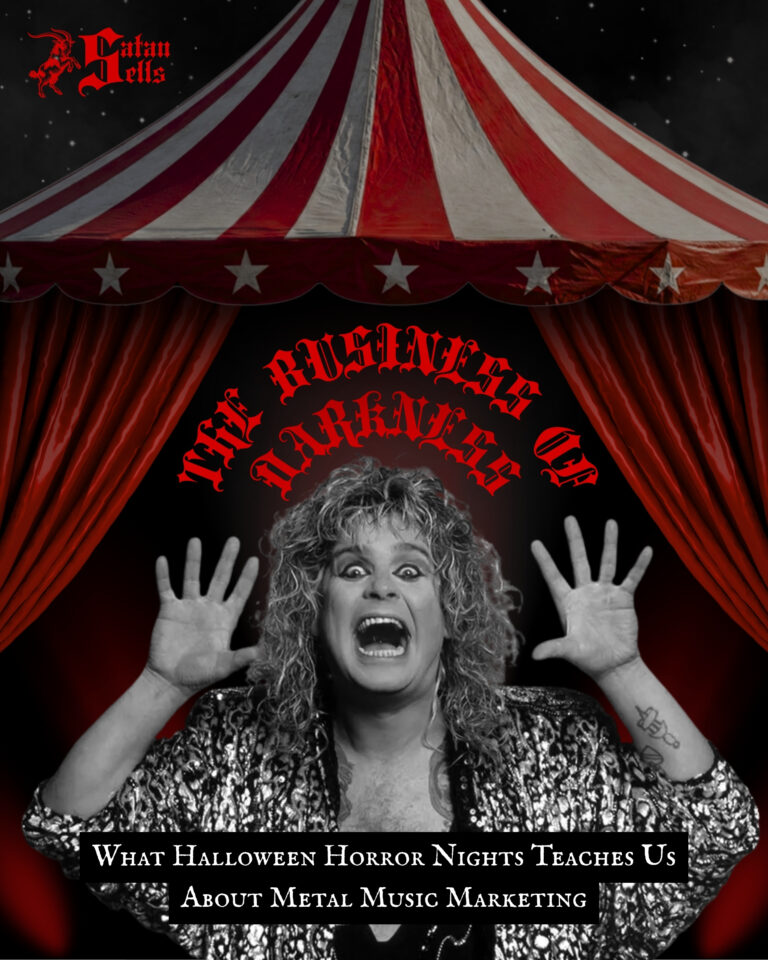
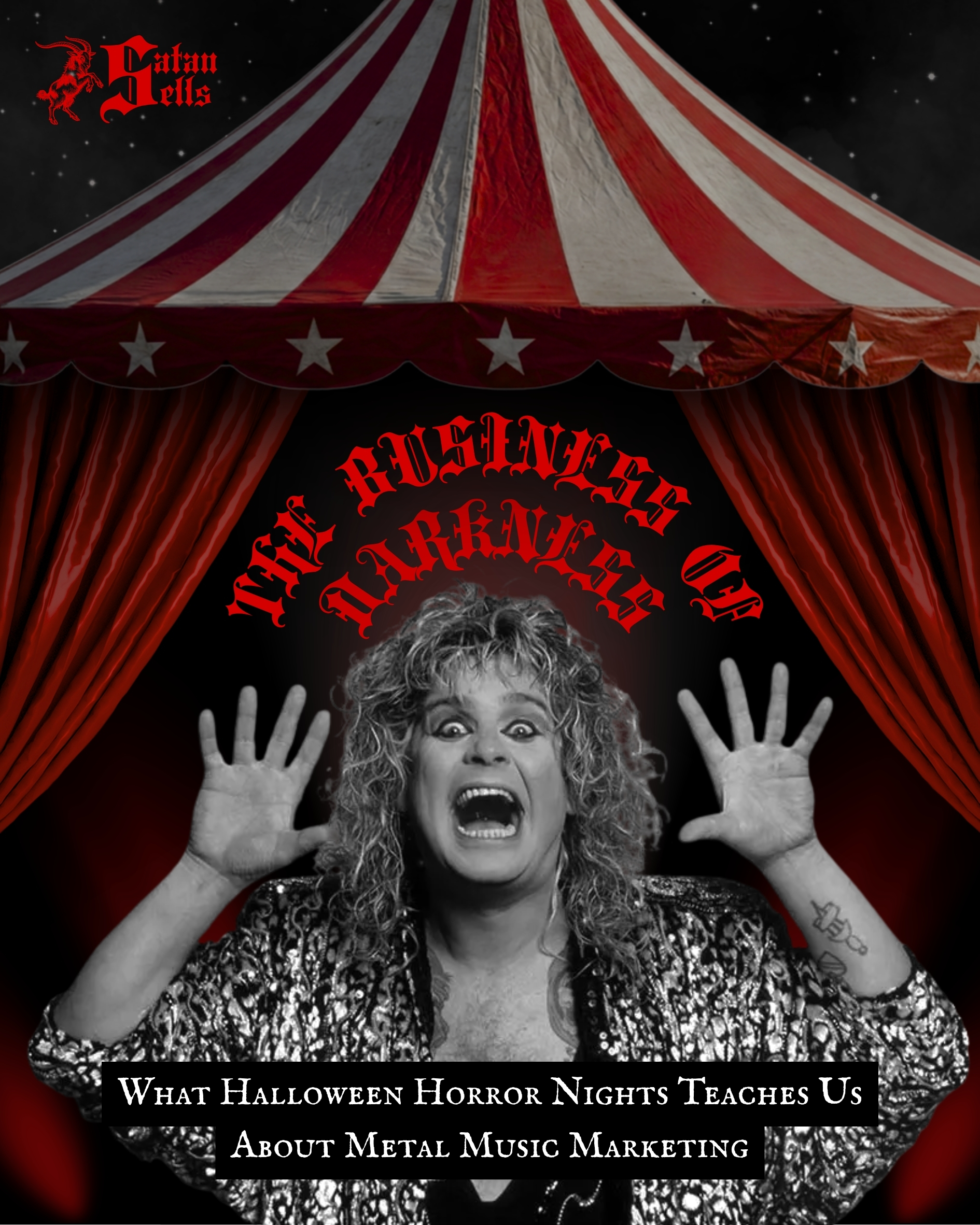
And so, when Universal announced that Ozzy Osbourne would become the latest musician to receive his own Halloween Horror Nights house, I wasn’t just excited as a metal and horror fan – I was interested in what it represents for both industries as a whole. Described as a “non-traditional memorial”, the Ozzy Osbourne: Prince of Darkness experience will transport guests through the surreal worlds connected to albums including Diary of a Madman, Bark at the Moon, The Ultimate Sin, and Black Rain.
Rather than simply recreating moments from Ozzy’s career, Universal is transforming his music, artwork and larger-than-life personas into physical environments. Guests will encounter versions of Ozzy ranging from Madman Ozzy and Werewolf Ozzy to the Prince of Darkness himself, moving through locations inspired by his sound and imagery established throughout his solo career.
On the surface, this might appear to be another celebrity collaboration for Halloween Horror Nights. However, the significance lies in what Universal is actually adapting. This is not a film franchise, television series or fictional universe created specifically for the attraction. Instead, Universal is treating Ozzy Osbourne’s solo catalogue as an established horror universe, translating decades of album artwork, symbolism and theatrical performance into an immersive experience.
The attraction demonstrates that heavy metal’s value extends beyond the music itself. The imagery, characters and mythology surrounding an artist can become commercially valuable assets in their own right.
Heavy Metal’s History at Halloween Horror Nights
Ozzy Osbourne is arguably the biggest name to headline Halloween Horror Nights, but he certainly isn’t the first. In fact, Universal has been borrowing from heavy metal for nearly three decades – almost as long as the event itself, which was founded in 1991. Looking back at those collaborations reveals an interesting pattern: HHN hasn’t just invited any old musicians into its mazes, instead it has repeatedly turned to artists who had already built horror worlds of their own.
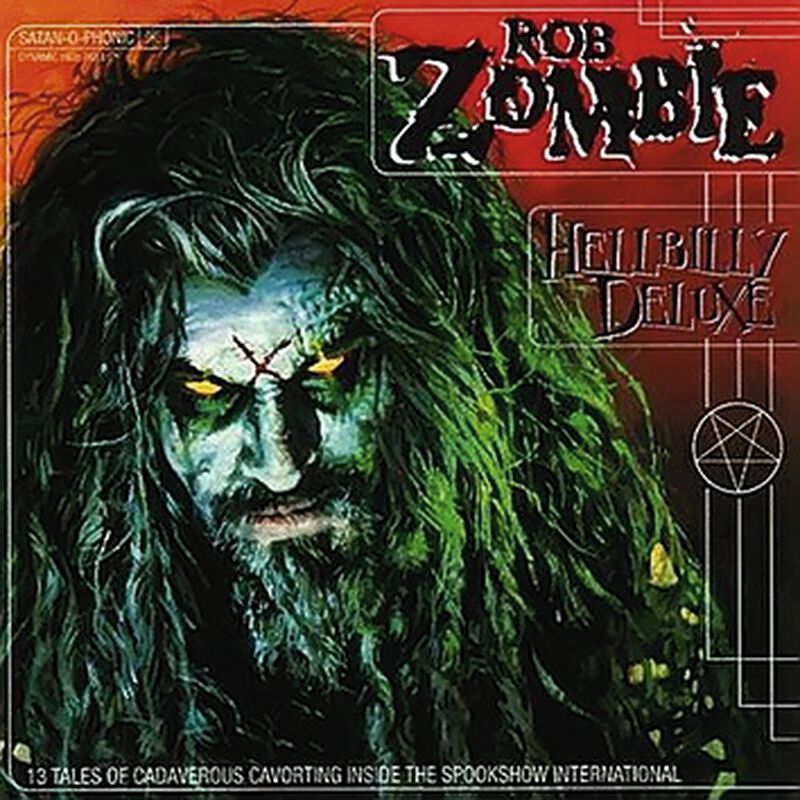
The first real example came in 1999 with The Thrilling Chilling World of Rob Zombie. Rather than adapting a film, Universal built an original maze based on Zombie’s album, Hellbilly Deluxe, sending guests through a giant replica of his head before plunging them into the twisted universe he’d created through songs like “Living Dead Girl“, “Dragula” and “Superbeast“. In hindsight, a very wise choice indeed… Long before intellectual property dominated themed entertainment to the extent we know today, Universal recognised that Rob Zombie’s music wasn’t just a mishmash of tracks – it was an entire aesthetic to borrow from.
Doubling down the following year with Rob Zombie’s American Nightmare, this is where the tale takes an unexpected turn. While developing the maze, Zombie realised the concept had the potential to become a feature film and pitched it to Universal as House of 1000 Corpses. After shooting however the studio backed away, reportedly concerned about the film’s content, and Zombie purchased the rights to the completed film. Luckily for horror fans everywhere the project lived on with MGM, and was ultimately released in 2003; becoming one of the genres defining cult classics. It’s one of the strangest examples in Halloween Horror Nights history: instead of adapting a film into a maze, the maze helped inspire the film.
By 2010, we’ve come full circle… House of 1000 Corpses: In 3-D Zombievision finally brought the Firefly family to Halloween Horror Nights, taking guests through Captain Spaulding’s roadside attraction, the Firefly house and Dr. Satan’s underground lair. Returning the following year and ultimately winning House of the Year, it showed how a single creative idea could evolve across music, immersive entertainment and cinema before finding its way back to the event that helped shape it in the first place.
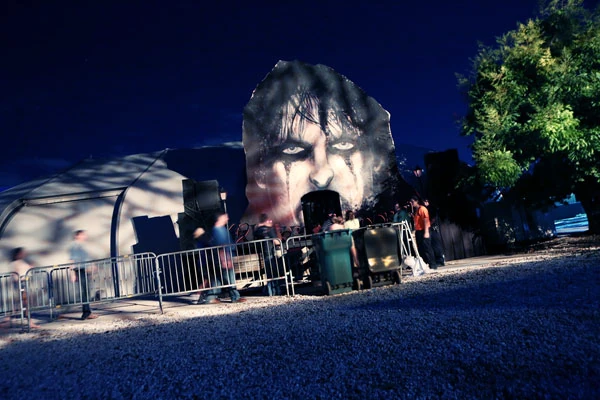
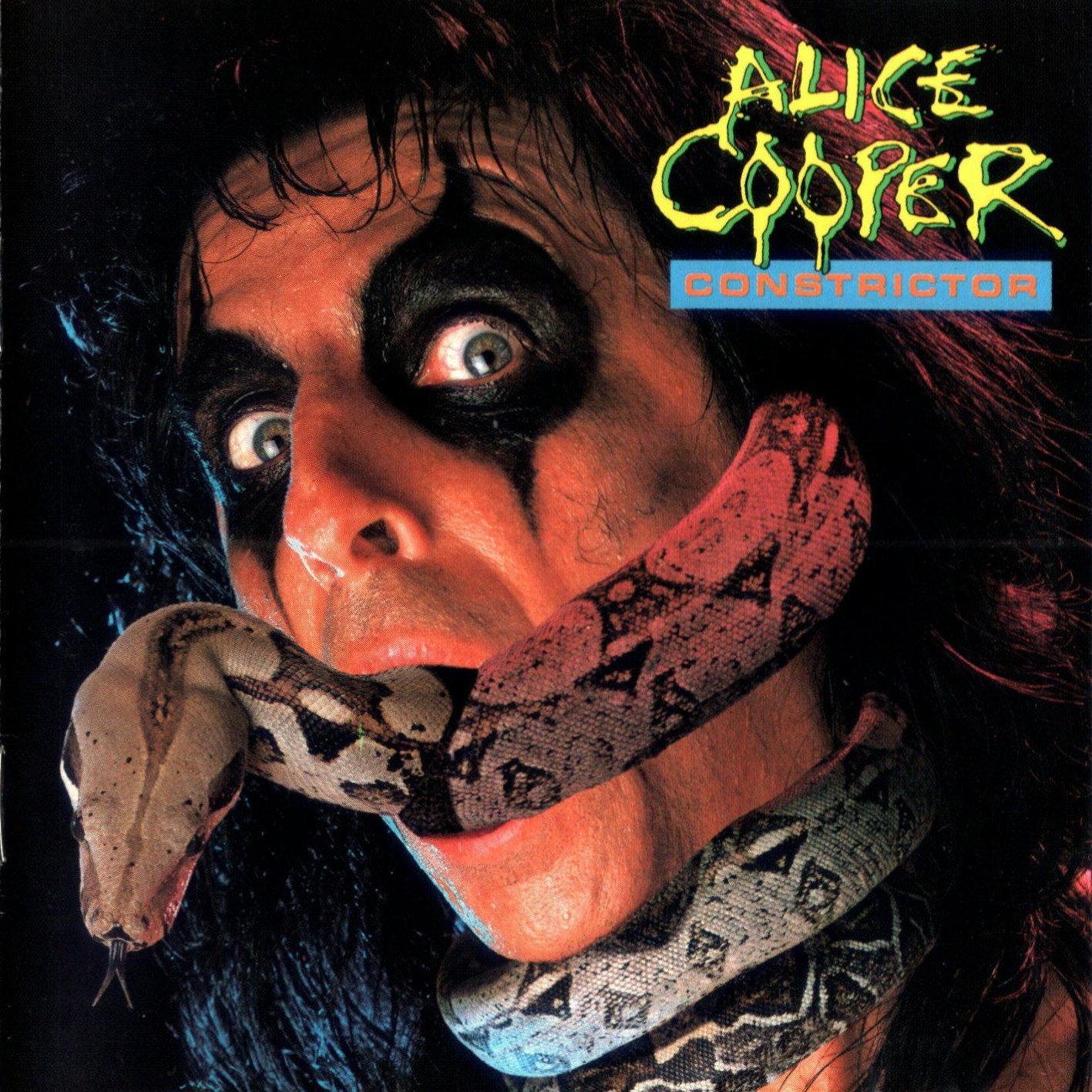
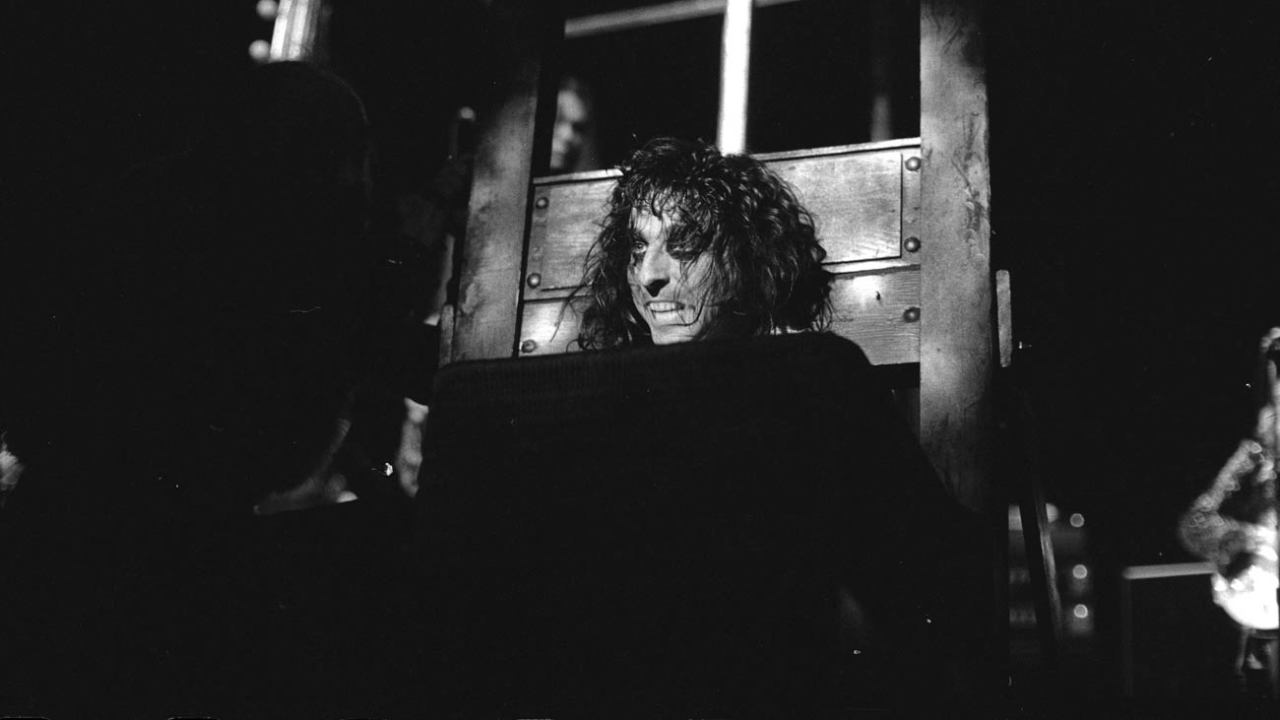
Alice Cooper’s two mazes took a completely different approach. Welcome to My Nightmare and Alice Cooper: Goes to Hell 3D weren’t really adaptations of albums at all. Instead, they expanded the theatrical identity Cooper had spent decades perfecting on stage. Guests journeyed through an interpretation of Dante’s Inferno, passing through Purgatory, Limbo and the Seven Deadly Sins while encountering guillotines, monsters, executions and larger-than-life versions of Cooper himself. In many ways, Halloween Horror Nights wasn’t creating anything new here. Alice Cooper had been building immersive horror experiences every night on tour since the 1970s; Universal flipped the coin and invited fans to step onto his stage.
Black Sabbath: 13 3D perhaps came closest to what Universal is attempting with Ozzy this year. There was no film to adapt and no conventional story to follow. Instead, the maze translated Black Sabbath’s imagery into physical spaces, moving guests through demon-filled cathedrals, graveyards, madhouses, war zones and radioactive wastelands inspired by songs including “Paranoid“, “War Pigs” and “Iron Man“. The assumption was simple: fans already understood the symbolism within the music. They didn’t need a narrator explaining why they were there because decades of album artwork, lyrics and iconography had already done the storytelling.
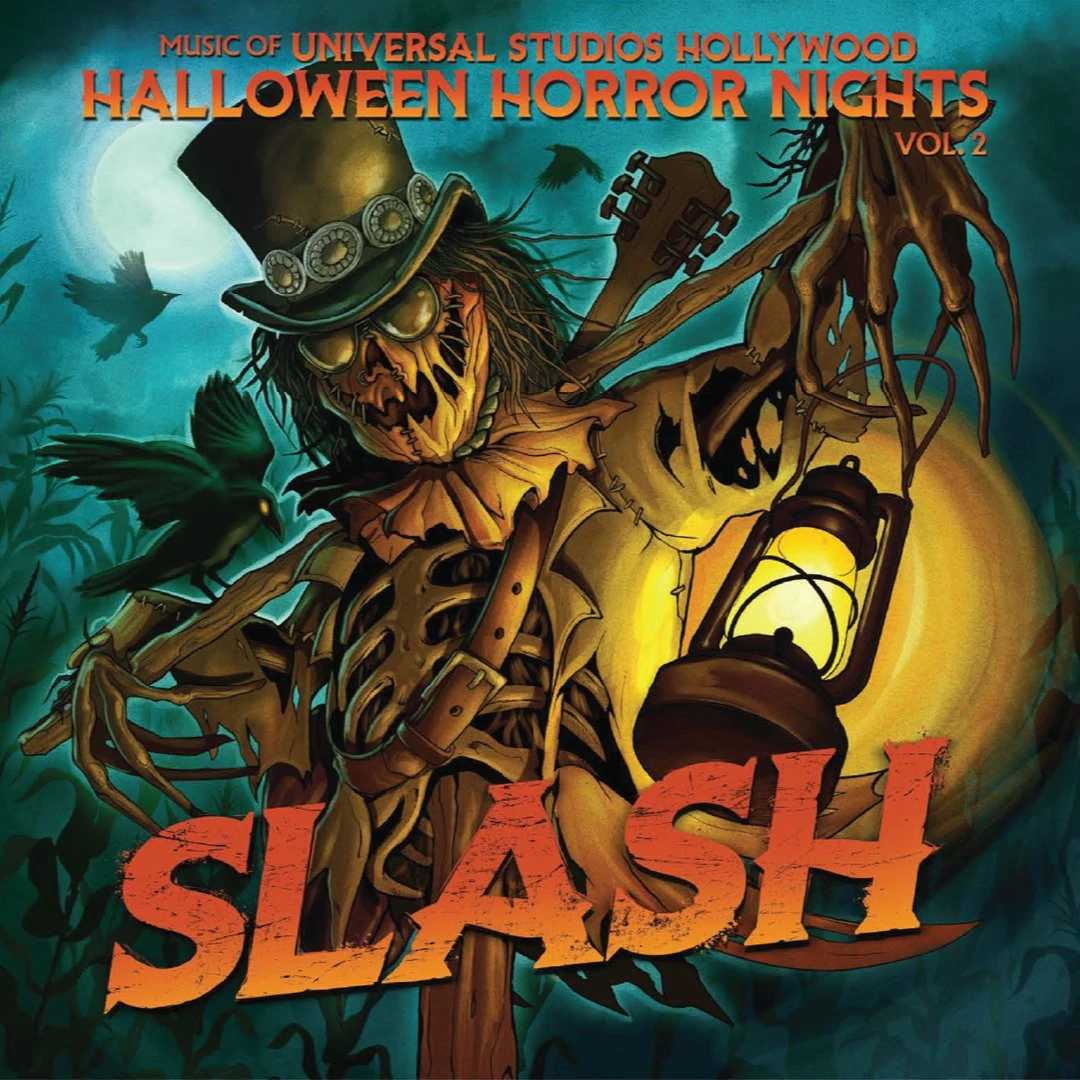
More recently, Universal explored another kind of partnership altogether. Universal Monsters: Music by Slash and Scarecrow: Music by Slash weren’t about adapting Slash as a character or celebrating his career, instead, he composed an original score for an existing franchises and houses, proving that heavy metal musicians don’t just bring recognisable branding to immersive entertainment; they also understand how to create atmosphere, tension and emotional pacing.
When looked at together, these attractions tell the story of Halloween Horror Nights’ changing relationship with heavy metal. Rob Zombie proved musicians could build worlds worth walking through. Alice Cooper showed that theatrical performance could become environmental storytelling. Black Sabbath demonstrated that an album’s visual identity could sustain an entire attraction, while Slash highlighted the creative role musicians can play behind the scenes. Ozzy Osbourne: Prince of Darkness sounds to be the natural culmination of all of those ideas.
Universal isn’t claiming to simply celebrate Ozzy’s music, we’re told it will also explore the mythology that grew around it. Described as a “living horror movie“, the new house draws upon more than forty years of album artwork, personas and symbolism rather than following a single narrative. In doing so, it quietly reinforces something Halloween Horror Nights has understood since 1999: the most successful heavy metal artists don’t just write songs. They create worlds.
Why Heavy Metal Works So Well in Immersive Entertainment
The repeated appearance of heavy metal artists at Halloween Horror Nights is not accidental. While horror films have traditionally formed the foundation of the event, metal musicians bring something uniquely valuable: an established visual language. Metal has always communicated through imagery as much as sound, with artists creating identities through album artwork, logos, stage design, costumes and recurring symbols. Ozzy Osbourne’s castles and creatures, Black Sabbath’s occult imagery and Alice Cooper’s theatrical horror all demonstrate how metal artists create worlds that extend far beyond individual songs.
This existing world-building makes heavy metal particularly suited to immersive entertainment. Successful attractions rely on environmental storytelling, using architecture, props, lighting, sound and performance to establish a narrative and atmosphere. Rather than creating an entirely new fictional universe, designers can draw from decades of established imagery, allowing audiences to immediately recognise the themes, characters and aesthetics they are entering. Halloween Horror Nights transforms these carefully constructed identities from something audiences observe into something they can physically experience.
Beyond the visual similarities, there is also a natural connection between metal and horror audiences. Both cultures have historically embraced themes of darkness, the supernatural and the extreme, not as genuine threats but as forms of theatrical expression. They provide spaces where audiences can explore fear, rebellion and fantasy within a controlled environment, making the transition from listening to a metal artist to entering their world feel surprisingly natural.