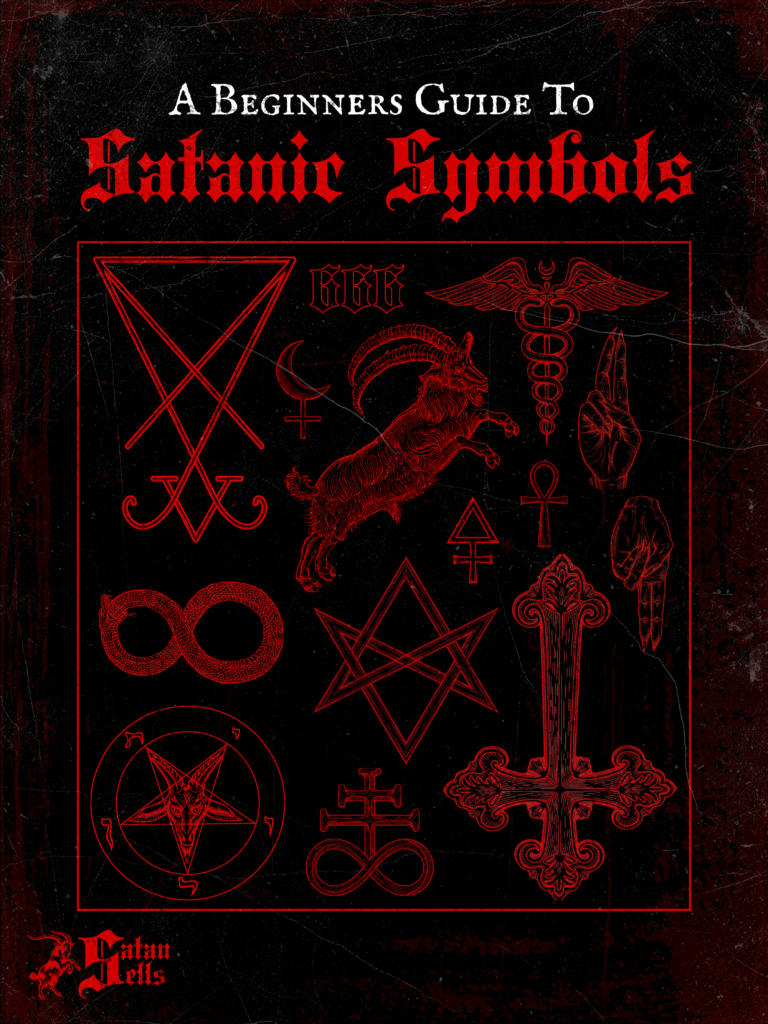
Origins and Meanings of Key Occult Symbols Explained…
Sigil of Baphomet
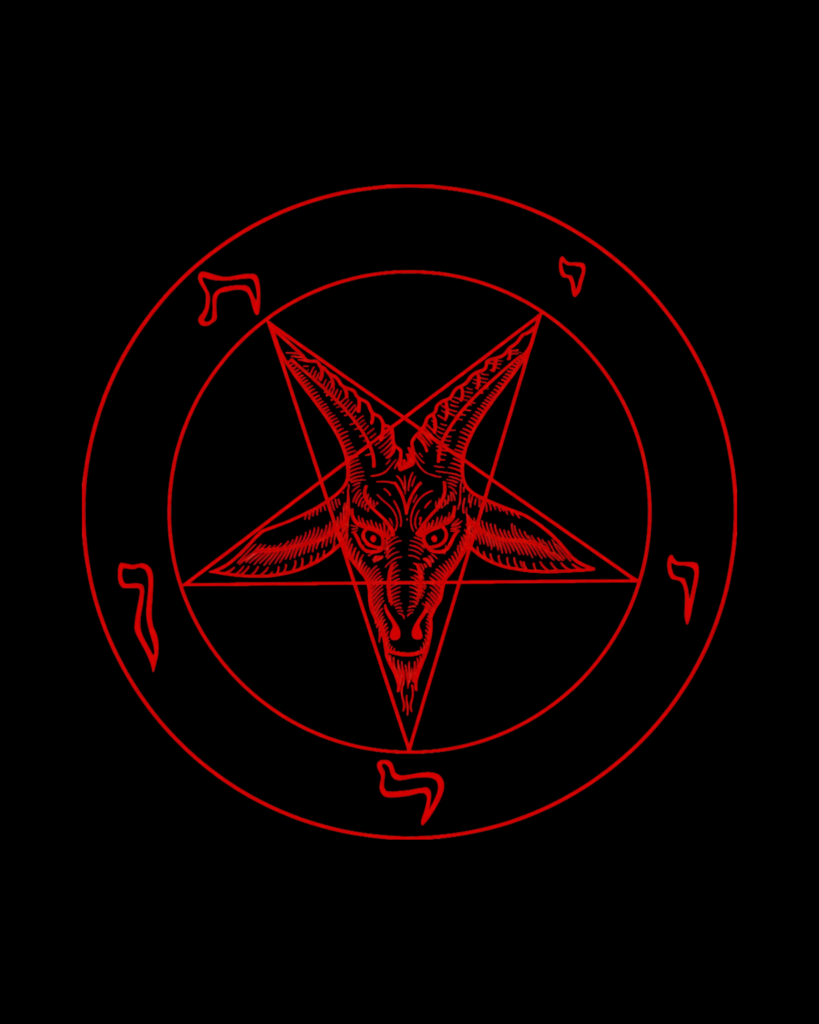
The Sigil of Baphomet is the official symbol of the Church of Satan and one of the most recognisable emblems associated with modern Satanism. The design features a goat’s head inside an inverted pentagram, usually surrounded by Hebrew letters spelling “Leviathan.”
The symbol’s origins can be traced back to nineteenth-century occultism. French occultist Éliphas Lévi popularised the image of Baphomet in his 1854 work Dogme et Rituel de la Haute Magie. Lévi’s Baphomet was not originally Satan, but a symbolic figure representing balance between opposites: male and female, human and animal, light and dark. His famous illustration combined esoteric traditions, alchemy, and mysticism into a single symbolic figure.
The goat head within the inverted pentagram emerged later through ceremonial magic traditions. In the 1890s, occult author Stanislas de Guaita
used similar imagery in books on magic and demonology. During the 1960s, Anton LaVey adopted the design for the Church of Satan, standardising it into the version commonly seen today.
The inverted pentagram itself had already gained associations with materialism and carnality, while the goat symbolised instinct, independence, and rejection of spiritual purity. Combined together, the Sigil of Baphomet became a visual declaration of individualism, earthly existence, and opposition to traditional Christian morality.
Leviathan Cross
The Leviathan Cross, sometimes called the Satanic Cross or Cross of Sulfur, is a symbol strongly associated with modern Satanism and occult imagery. The design consists of a double-barred cross sitting above an infinity symbol, combining religious and alchemical symbolism into a single emblem.
Historically, the symbol originates from alchemy rather than Satanism. In medieval and Renaissance alchemical texts, it represented sulfur, one of the three essential elements in alchemical philosophy alongside mercury and salt. Sulfur symbolised the soul, passion, individuality, and active masculine energy. Because sulfur was also associated with fire and brimstone, it gradually gained infernal connotations within Christian culture.
The name “Leviathan Cross” is a modern interpretation. Leviathan itself is a gigantic sea serpent mentioned in the Hebrew Bible, later associated with
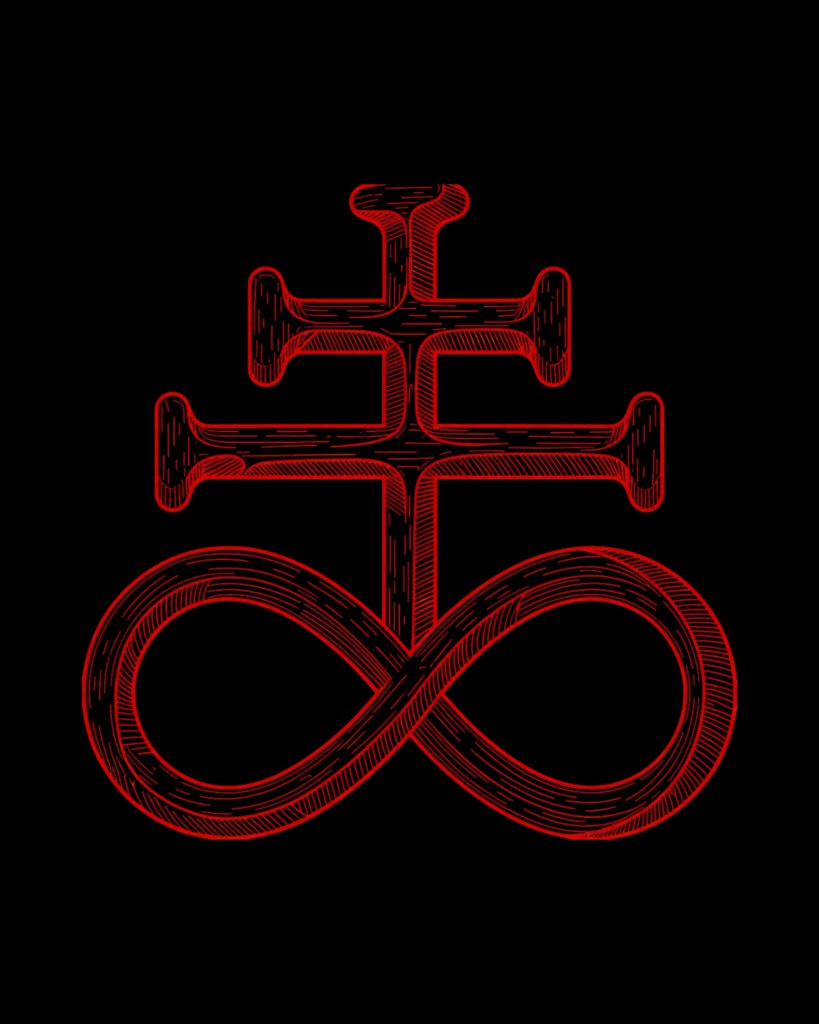
chaos, darkness, and demonic imagery in Christian tradition. Twentieth-century Satanic groups adopted the symbol because of these associations with rebellion, power, and opposition to spiritual authority.
The infinity symbol beneath the cross is often interpreted as representing the eternal nature of the universe or the endless pursuit of knowledge and self-determination. The double cross above it can signify balance between material and spiritual existence, though interpretations vary widely.
Cross of Saint Peter
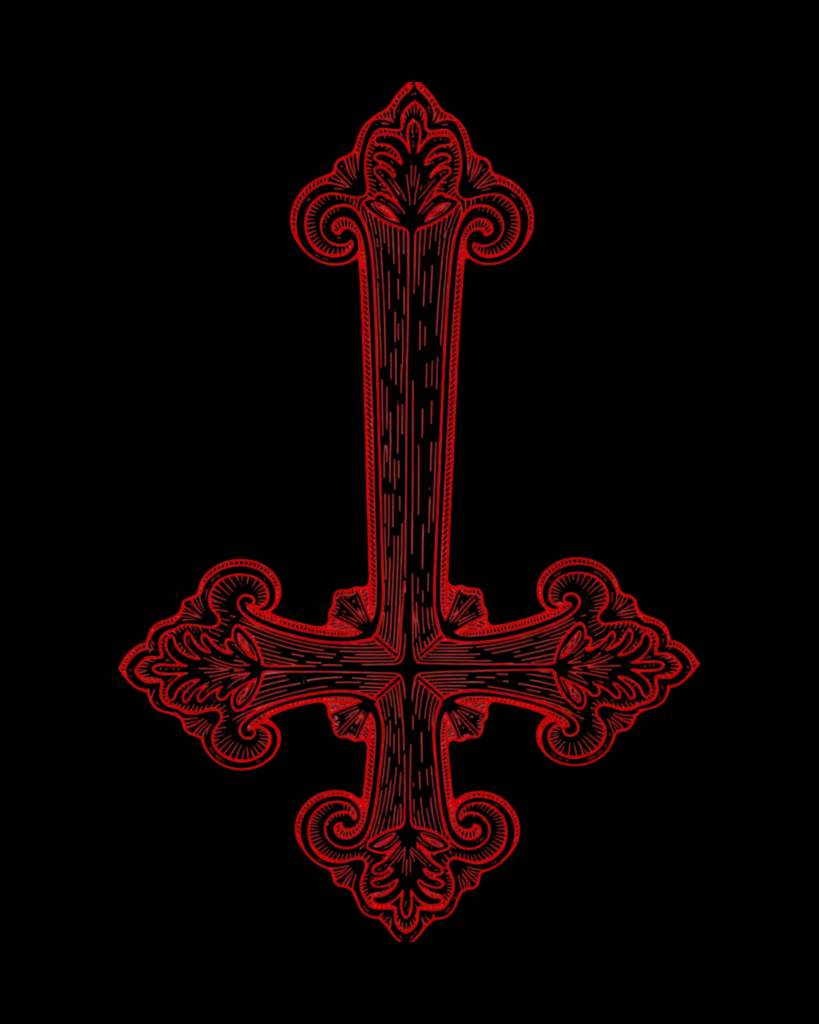
The upside down cross is one of the most misunderstood symbols associated with Satanism. Long before it became linked to horror films, heavy metal, and anti-Christian imagery, it was actually a Christian symbol known as the Cross of Saint Peter. According to early Christian tradition, the apostle Peter was sentenced to crucifixion in Rome during the reign of Emperor Nero around the first century CE. Peter reportedly requested to be crucified upside down because he did not consider himself worthy to die in the same manner as Jesus Christ. Because of this, the inverted cross became a symbol of humility, martyrdom, and devotion within Christianity.
The association between the upside down cross and Satanism is comparatively modern. During the nineteenth and twentieth centuries, Gothic literature, occult revival movements, and later horror cinema began using inverted religious imagery to signify rebellion, blasphemy, or opposition to Christian
authority. Films such as The Exorcist and Rosemary’s Baby cemented the inverted cross as visual shorthand for demonic forces in popular culture.
Within Satanism itself, meanings vary. Some Satanists use the symbol purely as an act of anti-Christian rebellion, while others avoid it altogether because of its deeply Christian origins. In many cases, the upside down cross says more about cultural fears surrounding religion than it does about Satanic philosophy itself.
Unicursal Haxagram
The unicursal hexagram is a six-pointed star drawn in one continuous line, distinguishing it from the more familiar Star of David. Though it resembles ancient hexagram symbols found across many cultures, the unicursal version became especially associated with ceremonial magic and the occult during the nineteenth and twentieth centuries.
Its modern popularity largely comes from the magical system of Aleister Crowley and the religion of Thelema. Crowley adopted the unicursal hexagram as an important symbolic emblem representing the union of opposites and the harmony of cosmic forces. Unlike traditional hexagrams formed from two overlapping triangles, the unicursal version’s single unbroken line suggested unity, continuity, and magical will.
The symbol often appears with a five-petalled flower at its centre, representing
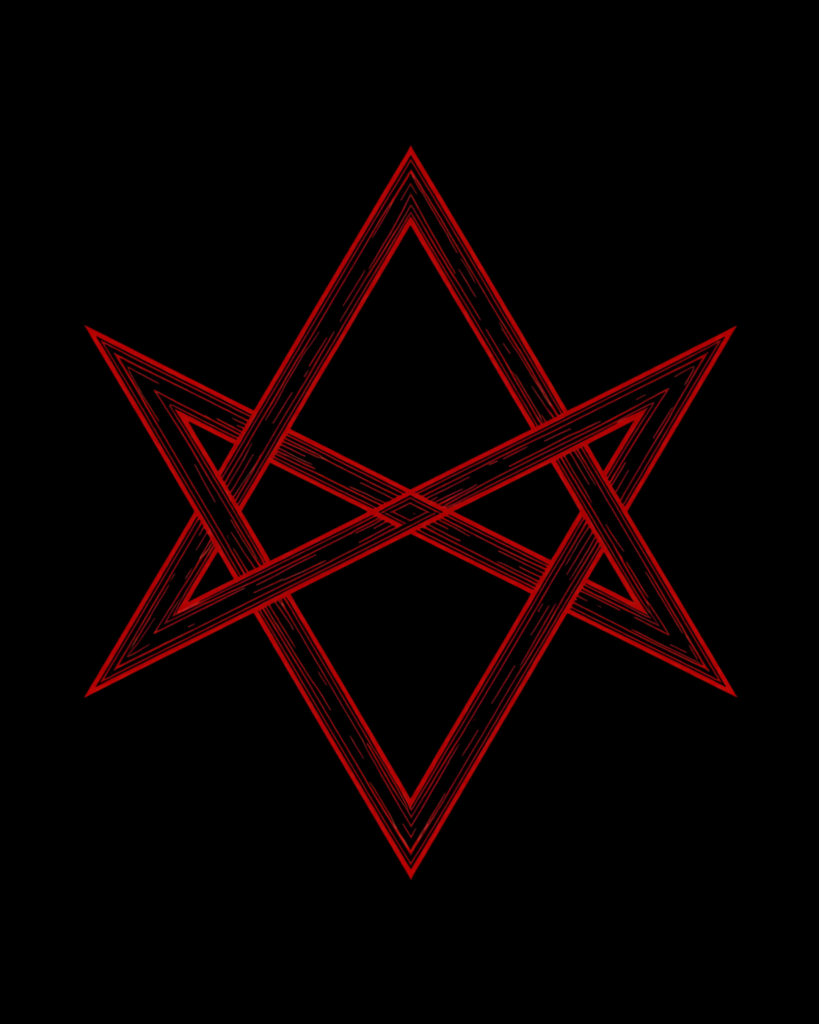
the human microcosm within the larger universe. In Thelemic philosophy, it symbolises the reconciliation of spiritual and earthly forces, masculine and feminine energies, and the connection between humanity and divinity.
Although sometimes associated with Satanism because of Crowley’s controversial reputation and occult influence, the unicursal hexagram is not inherently Satanic. It is more closely tied to ceremonial magic, esotericism, and Thelemic spirituality.
In contemporary alternative culture, the symbol appears in occult art, jewellery, album covers, and tattoos. Its geometric simplicity and mysterious associations have made it popular far beyond strictly magical circles, often representing personal transformation, hidden knowledge, or spiritual individualism.
The Goat
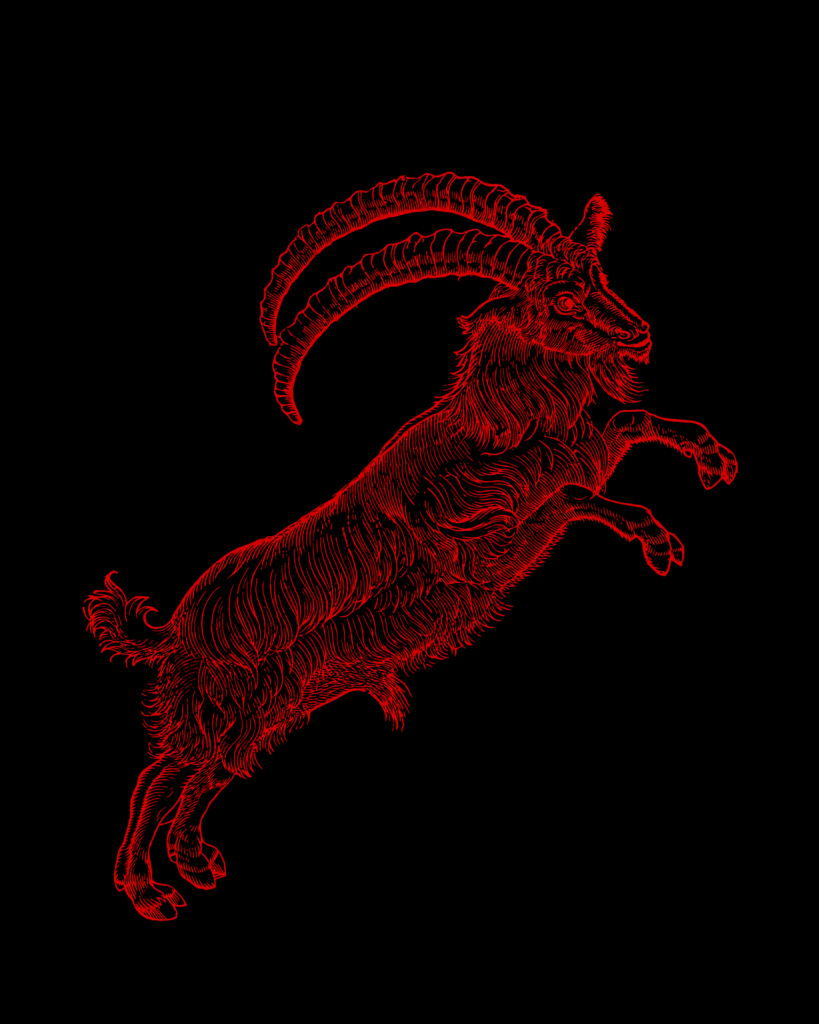
The goat has been associated with Satanic imagery for centuries, though its connection to evil is largely rooted in religious symbolism and cultural fear rather than ancient devil worship. In many early societies, goats actually represented fertility, vitality, wilderness, and masculine power. Pagan gods such as the Greek god Pan and the Roman Faunus were depicted with goat-like features, combining human and animal traits to symbolise untamed nature and sexuality.
As Christianity spread across Europe, many pagan symbols and deities were gradually demonised. Horned gods associated with forests, pleasure, and instinct became visually linked with the Christian Devil. This transformation helped shape the now-familiar image of Satan with horns, hooves, and goat-like characteristics.
The biblical concept of the “scapegoat” also contributed to the goat’s darker reputation. In ancient Jewish ritual described in Leviticus, a goat symbolically carried the sins of the community into the wilderness. Over time, goats became associated with sin, exile, and impurity.
Nineteenth-century occultism further cemented the goat’s connection to Satanism through the figure of Baphomet. Éliphas Lévi’s famous goat-headed illustration blended esoteric symbolism with imagery of balance and duality. Later Satanic groups adopted the goat as a symbol of instinct, independence, earthly existence, and rejection of spiritual repression.
Today, the goat remains one of the most iconic symbols in Satanic and occult aesthetics, though its meaning often centres more on rebellion and natural human desire than literal evil. Check here for more about goats’ biblically bad reputation…
Sigil of Lucifer
The Sigil of Lucifer is a relatively modern occult symbol associated with Luciferianism, ceremonial magic, and contemporary Satanic aesthetics. Unlike ancient religious emblems, its precise origins are somewhat unclear, though the earliest known appearances date to seventeenth-century grimoires and magical texts.
The symbol most commonly appears in the 1677 grimoire Grimorium Verum, a handbook of ceremonial magic claiming to describe methods for summoning spirits and demons. In the text, the sigil is associated specifically with Lucifer, portrayed not simply as Satan but as a powerful spirit connected to enlightenment, intellect, and rebellion.
Visually, the sigil combines several symbolic elements. The upper triangle is often interpreted as aspiration or will, while the X-shape beneath it can
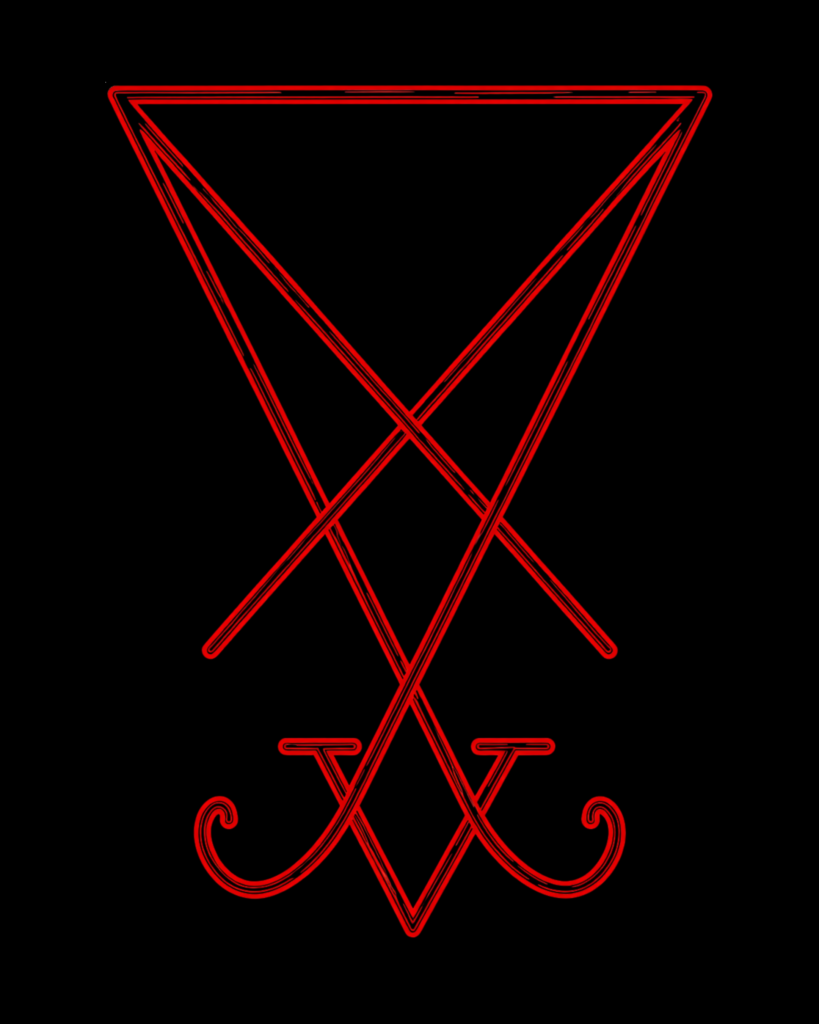
represent power, choice, or intersection between worlds. The lower V-shape resembles a chalice, symbolising creation or receptivity. Some occult interpretations also connect the design to alchemical symbolism and the pursuit of knowledge.
Lucifer himself has evolved significantly throughout history. In the Bible, the name “Lucifer” originally referred to the morning star, derived from Latin meaning “light-bringer.” Later Christian tradition transformed Lucifer into a fallen angel associated with pride and rebellion against God.
Modern Luciferians frequently reinterpret Lucifer not as a literal devil, but as a symbolic figure of personal enlightenment, questioning authority, intellectual freedom, and self-determination. Because of this, the sigil has become popular in occult art, jewellery, tattoos, and alternative spiritual movements.
The Number of The Beast
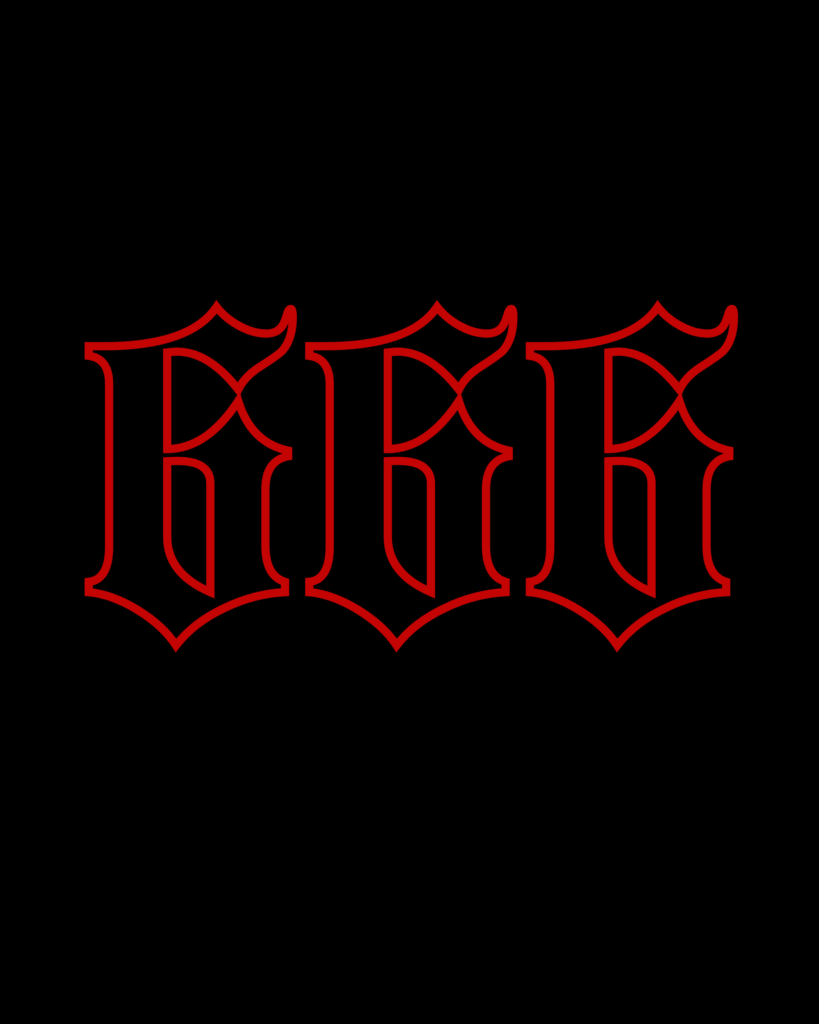
The number 666 originates from the Christian Bible, specifically the Book of Revelation in the New Testament. Revelation 13:18 describes it as “the number of the beast,” associated with a monstrous figure representing evil, corruption, and opposition to God during the apocalypse. The passage reads: “Let him that hath understanding count the number of the beast: for it is the number of a man; and his number is Six hundred threescore and six.”
Historians widely believe the number was originally a coded reference to the Roman emperor Nero. Ancient Hebrew and Greek often assigned numerical values to letters, a practice known as gematria. When “Nero Caesar” is translated into Hebrew characters, the numerical total equals 666. Early Christians living under Roman persecution likely used the number as a hidden critique of imperial power.
Over centuries, 666 became synonymous with Satan, the Antichrist, and general evil in Christian imagination. Medieval superstition and later Protestant fears surrounding apocalypse theology strengthened its reputation as a cursed or demonic number.
In the twentieth century, horror films, conspiracy theories, and sensationalist media transformed 666 into one of the most recognisable occult symbols in the world. Heavy metal bands, alternative fashion, and Satanic imagery adopted it both seriously and ironically. In modern Satanism, the number is often used less as literal devil worship and more as a symbol of rebellion against religious fear, moral panic, and authoritarian control.
As Above, So Below
The “As Above, So Below” hand gesture is most commonly associated with occult depictions of Baphomet and Hermetic philosophy. The phrase itself originates from the Emerald Tablet, a foundational text in Hermeticism attributed to the legendary figure Hermes Trismegistus. The statement suggests that the universe reflects itself across different levels of existence: the spiritual mirrors the physical, and the macrocosm mirrors the microcosm.
The imagery became especially famous through Éliphas Lévi’s nineteenth-century illustration of Baphomet. In the image, the goat-headed figure points one hand upward and the other downward while displaying the Latin phrases solve and coagula, meaning “dissolve” and “recombine.” The gesture visually expresses the Hermetic principle that forces above and below are interconnected and balanced.
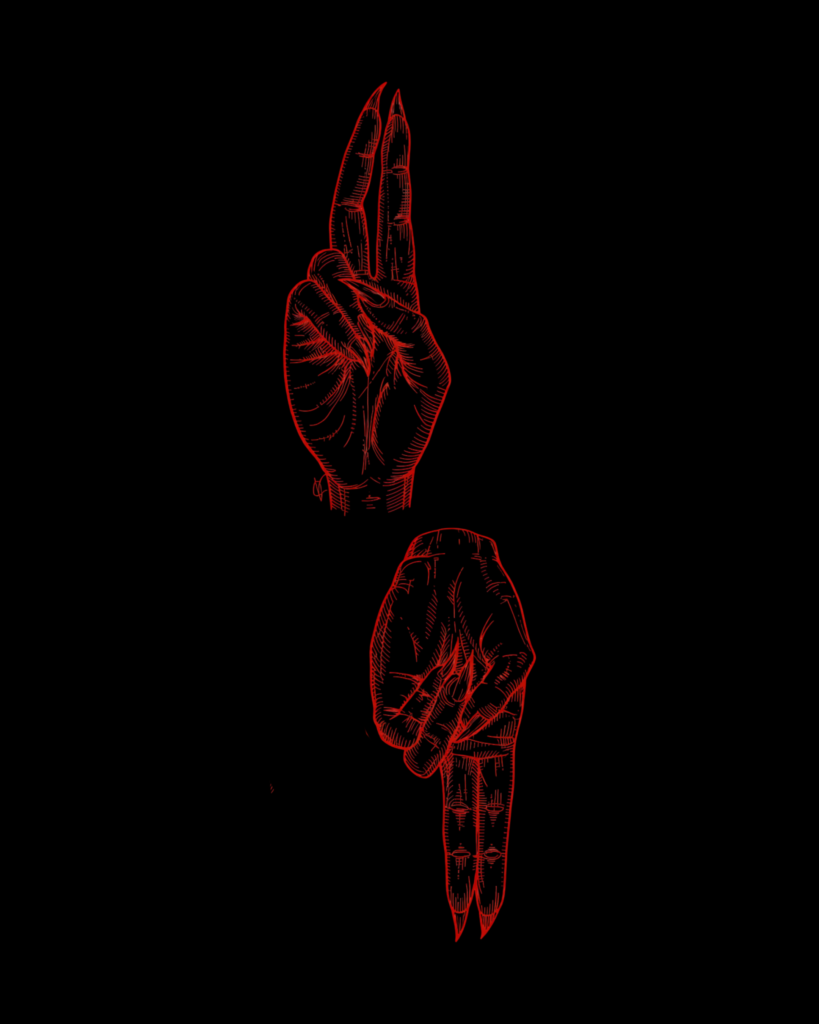
This symbolism reflects ideas of duality, equilibrium, and transformation. Rather than representing pure evil, Lévi intended Baphomet to symbolise the reconciliation of opposites: male and female, light and dark, spirit and matter.
Modern occult movements, Satanic aesthetics, and alternative spirituality frequently use the hand gesture to symbolise hidden knowledge, cosmic balance, or personal transformation. Popular culture has also embraced the phrase through films, music, and fashion, often emphasising its mysterious or forbidden reputation.
The Caduceus
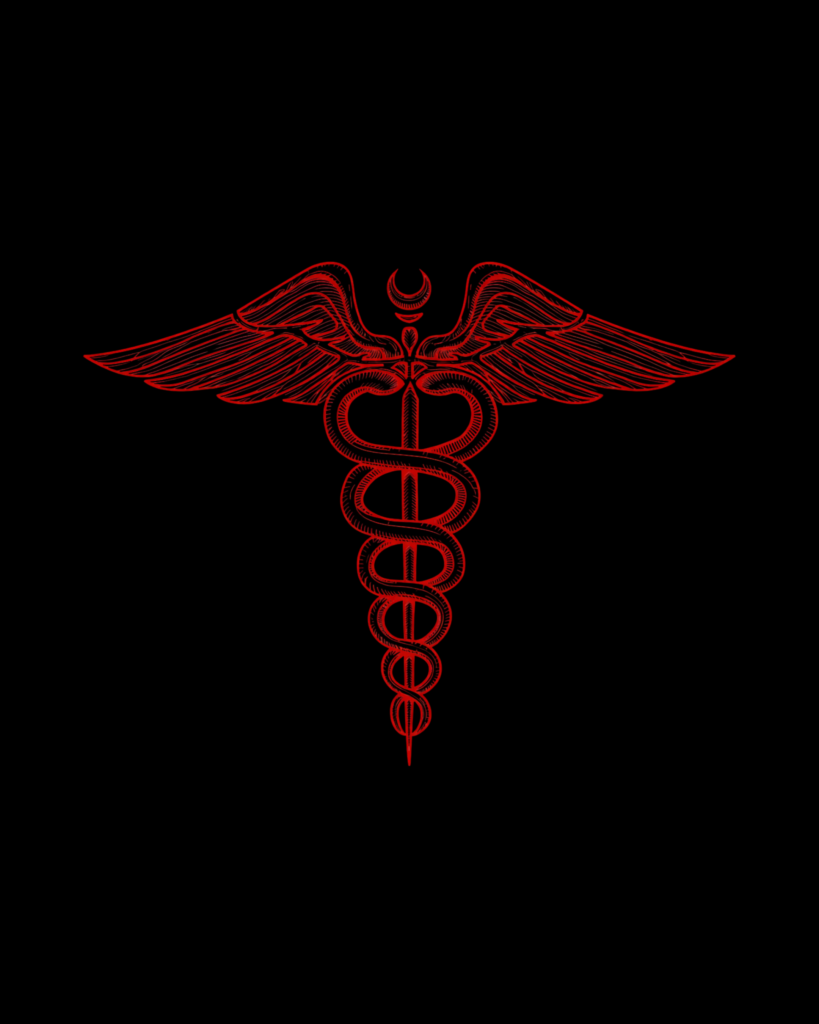
The Caduceus is a symbol originating from ancient Greek mythology, most commonly associated with the god Hermes, the messenger of the gods. Traditionally depicted as a winged staff entwined by two serpents, the Caduceus represented communication, trade, diplomacy, travel, balance, and magic. According to myth, Hermes gained the symbol after throwing his staff between two fighting snakes, causing them to wrap peacefully around the rod. The image therefore became associated with harmony, negotiation, and equilibrium between opposing forces.
One of the most widespread misconceptions surrounding the Caduceus is its connection to medicine. Although frequently used today as a medical emblem, particularly in the United States, the true ancient symbol of healing is actually the Rod of Asclepius, which features a single serpent wrapped around a plain
staff. Asclepius was the Greek god of medicine and healing, making his rod the historically accurate medical symbol. The confusion largely began in the early twentieth century when the United States Army Medical Corps adopted the Caduceus as its insignia, cementing the misunderstanding in popular culture.
Within occultism and esoteric traditions, the Caduceus took on additional symbolic meanings. The intertwined serpents were interpreted as representing duality, masculine and feminine balance, transformation, and hidden wisdom. Éliphas Lévi incorporated the Caduceus into his famous illustration of Baphomet during the nineteenth century, using it to symbolise alchemy, spiritual balance, and the union of opposing forces. Through this connection, the symbol became absorbed into wider occult and alternative spiritual imagery, though its origins remain firmly rooted in ancient mythology rather than Satanism itself.
Black Moon Lilith
The Black Moon Lilith symbol originates from a mixture of ancient mythology, astrology, and modern occult spirituality. Lilith herself first appears in Mesopotamian folklore as a female night spirit associated with storms, wilderness, and danger. Later Jewish folklore transformed Lilith into Adam’s first wife, created equal to him but cast out of Eden after refusing to submit. Though this story does not appear in the Bible itself, it became highly influential in medieval mystical writings and folklore.
Over time, Lilith evolved into a symbol of female independence, sexuality, rebellion, and untamed power. Nineteenth- and twentieth-century occult movements increasingly embraced her as a figure representing liberation from patriarchal control and religious restriction.
The “Black Moon” aspect comes from astrology. Black Moon Lilith is not a
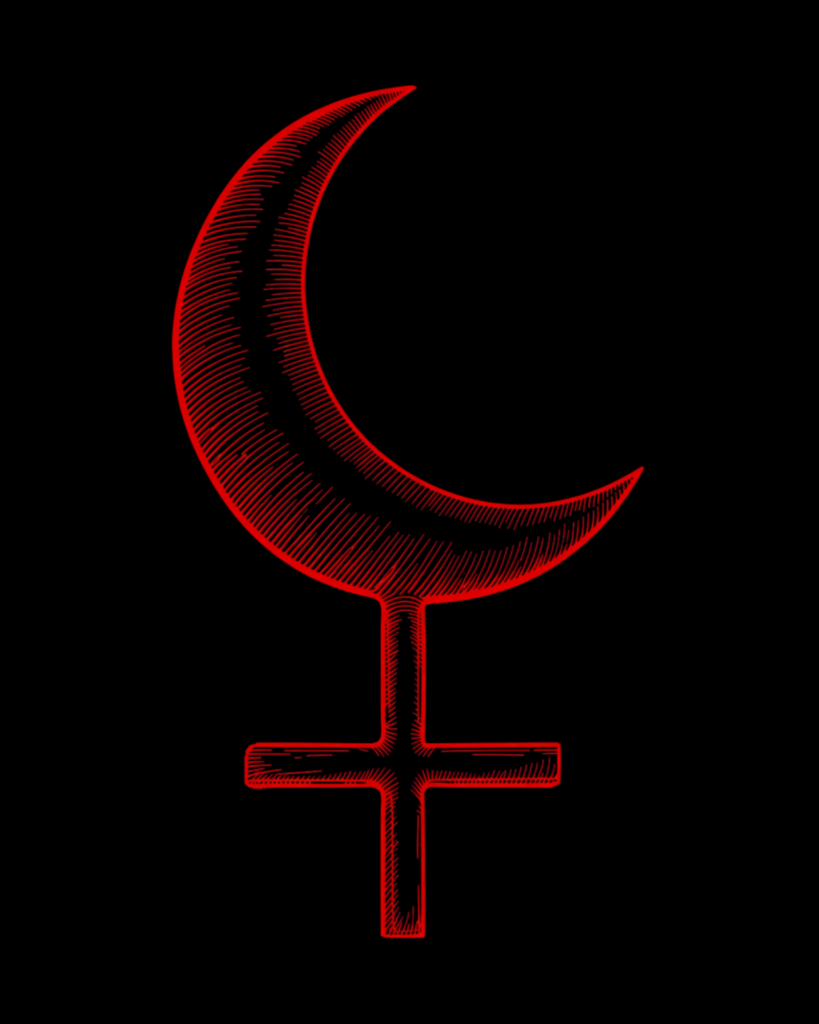
physical moon or planet, but a mathematical point representing the furthest distance between Earth and the Moon in its orbit. Astrologers associate it with hidden desires, suppressed emotions, taboo subjects, and primal instincts.
The modern Black Moon Lilith symbol usually combines a crescent moon atop a cross-like base. The crescent represents intuition, feminine mystery, and lunar energy, while the lower cross grounds it in material existence.
Though not inherently Satanic, Lilith imagery frequently appears within occult, witchcraft, and alternative spiritual communities. For many people, the symbol represents personal autonomy, shadow work, sexual freedom, and rejection of imposed social expectations rather than evil or demonic worship.
The Ankh
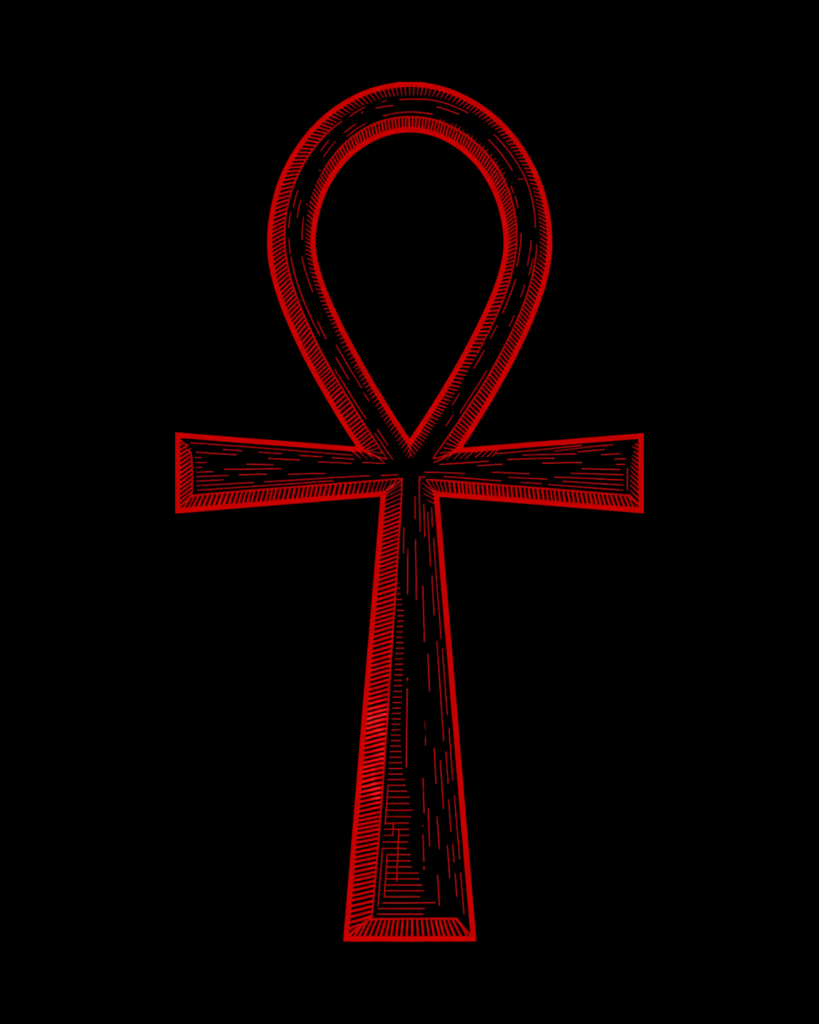
The ankh is one of the oldest symbols in human history, originating in Ancient Egypt over four thousand years ago. Often referred to as the “key of life,” it represented life, immortality, divine power, and the eternal soul. Egyptian gods and pharaohs were frequently depicted carrying ankhs in temple carvings and tomb paintings, symbolising both earthly existence and the promise of the afterlife. Although the symbol had no original connection to Satanism or the occult, its mysterious appearance and association with death and eternity helped it survive far beyond the fall of Ancient Egypt.
Western fascination with Egyptian imagery has existed for centuries, but major waves of “Egyptomania” followed events like Napoleon’s Egyptian campaigns in the late eighteenth century and the discovery of Tutankhamun’s tomb in 1922. Egyptian aesthetics heavily influenced Art Deco design, fashion,
jewellery, and cinema, creating a cultural obsession with curses, tombs, elaborate makeup, and ancient mysticism.
By the late twentieth century, the ankh had become deeply associated with goth culture. Goth fashion embraced themes of death, romance, melancholy, and immortality, making the symbol a natural fit. Films like The Hunger linked the ankh directly with vampires and eternal life, while The Sandman popularised it further through the character Death, whose oversized silver ankh became iconic within goth aesthetics. Over time, the symbol evolved into a visual shorthand for alternative identity, fascination with mortality, and belonging within goth subculture.
The Sulfur Cross
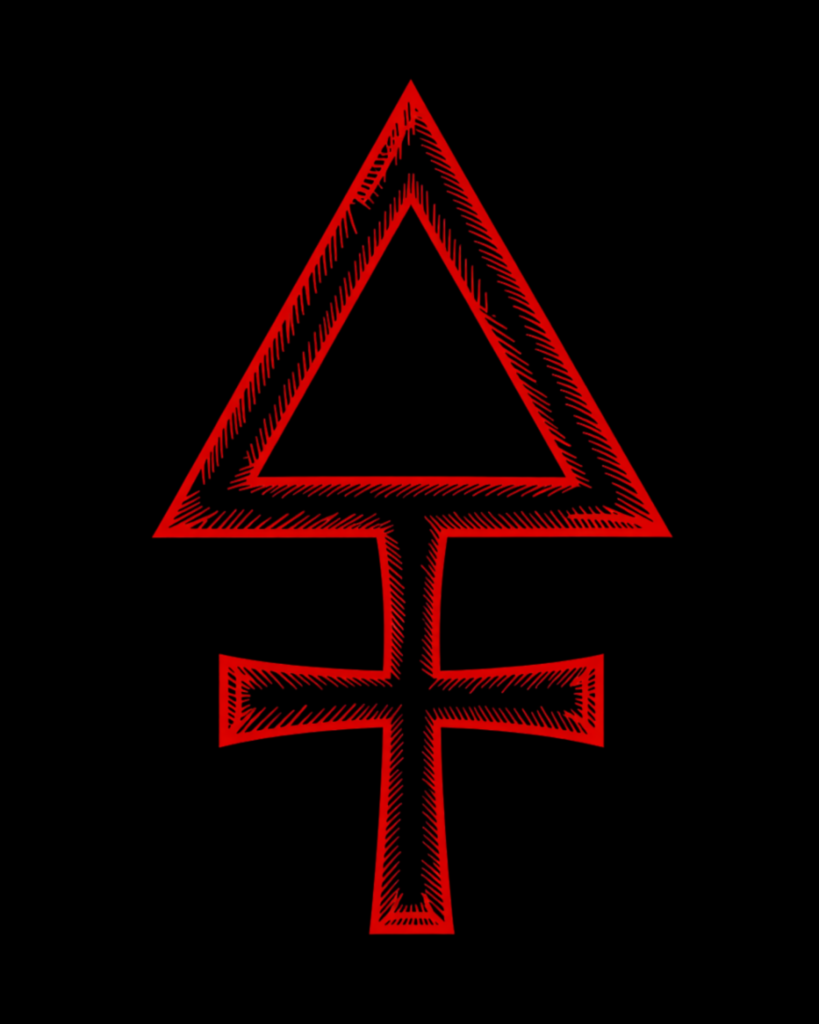
The Sulfur Cross also originates from alchemy rather than Satanism. The symbol was historically used to represent sulfur, one of the three essential elements in medieval alchemical philosophy alongside mercury and salt. Alchemists associated sulfur with passion, individuality, transformation, and the soul itself. Because sulfur is highly flammable and produces a strong, acrid smell when burned, it gradually became linked with ideas of fire, destruction, and the supernatural.
This connection was strengthened through Christianity’s association between sulfur and divine punishment. In the Bible, “fire and brimstone” is repeatedly used as a description of God’s wrath and the destruction of the wicked. The term “brimstone” is an old word for sulfur, and references to burning sulfur appear throughout both the Old and New Testaments, especially in descriptions of hell, apocalypse, and eternal damnation. The smell of sulfur
became culturally associated with demons, punishment, and infernal imagery because volcanic activity and burning sulfur deposits were often imagined as gateways to hell itself.
Visually, the Sulfur Cross combines a double-barred cross with an infinity symbol beneath it. In alchemical traditions, the upper cross represented spiritual manifestation while the lower infinity shape symbolised eternity and the limitless nature of existence. During the nineteenth and twentieth centuries, occult revival movements and modern Satanic groups adopted the symbol because of its associations with brimstone, rebellion, and anti-Christian imagery.
The Ouroboros
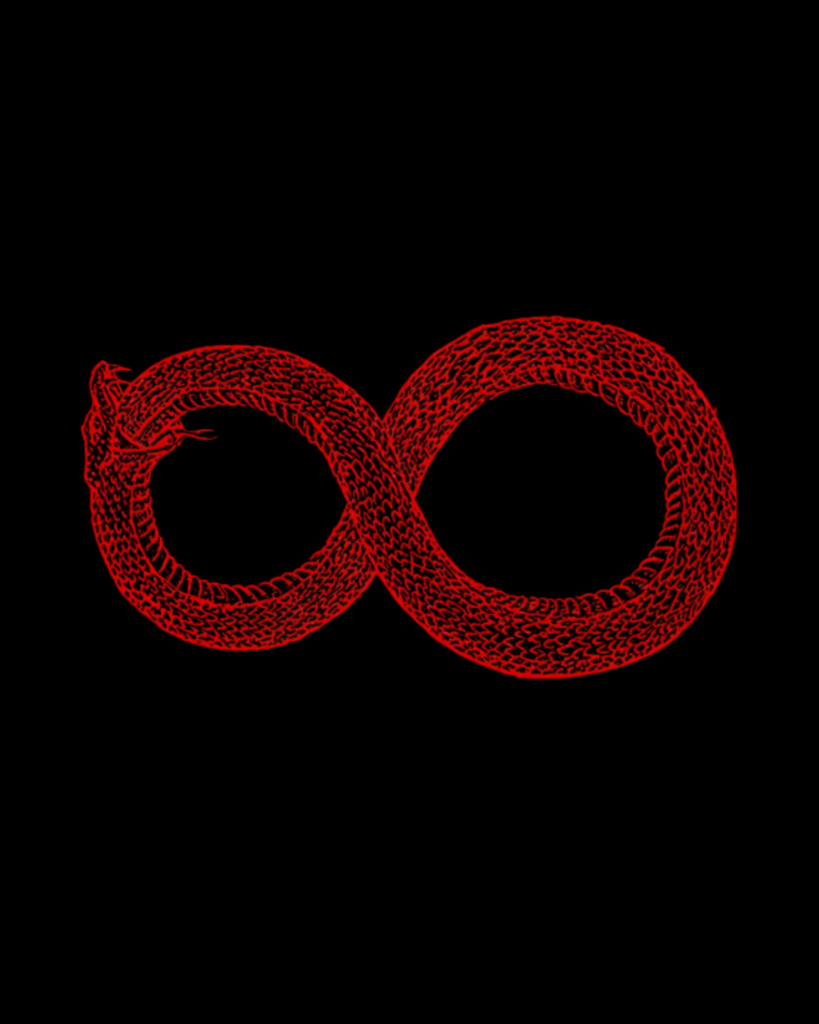
The Ouroboros is an ancient symbol depicting a serpent or dragon consuming its own tail, forming an endless circle. It is one of the oldest symbolic images in human history, appearing in ancient Egyptian, Greek, Norse, and alchemical traditions. The earliest known examples date back to ancient Egypt around the fourteenth century BCE, where it symbolised eternity, cosmic cycles, and the continuous renewal of life.
The word “Ouroboros” comes from Greek, roughly translating to “tail-devourer.” Ancient Greek philosophers and mystics adopted the image as a symbol of the eternal cycle of creation and destruction. Rather than representing evil, the serpent embodied infinity, transformation, and the interconnected nature of existence.
During the medieval and Renaissance periods, alchemists embraced the
Ouroboros as a symbol of unity and the endless process of transformation. It represented the cyclical nature of matter, death and rebirth, and the pursuit of spiritual enlightenment. The symbol often appeared alongside phrases such as “the all is one.”
Modern occultism and esoteric traditions continue to use the Ouroboros as a symbol of self-reflection, personal evolution, and eternal recurrence. In psychology, Carl Jung interpreted it as representing the unconscious mind and humanity’s instinct toward wholeness.
Although it sometimes appears alongside Satanic imagery due to its occult associations, the Ouroboros is far older and broader than Satanism itself. Its enduring appeal lies in its universal themes of transformation, immortality, and cyclical existence.
Keep Reading...